Day Rise
Usually, heading out the door without checking the weather doesn’t put your safety at risk. But what if the stakes were higher than that?
Project Specs
Timeline: 9 months
Deliverable: completed artifact
Skills: design research, visual design, UI design, wireframing, prototyping
Tools: Adobe Illustrator, Figma
Special thanks to my senior capstone instructors and advisors: Jim Walker, Gray Garmon, Kelcey Grey, Jason Wilkins, & Dr. Carma Gorman
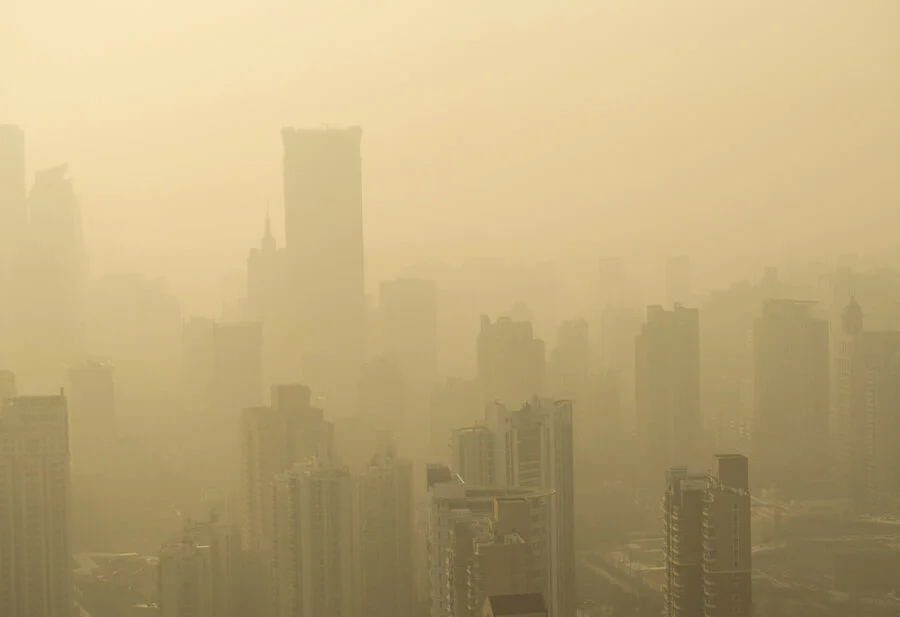
As the effects of climate change become a larger part of our daily lives, understanding the weather becomes critical. Even today, we see hazardous smog levels in Delhi and Beijing. Existing tools used by meteorologists like Air Quality Index (AQI) and Ultraviolet Index (UVI) are not considered by the general public, but these will soon be as important to check each morning as our daily highs and lows. Eventually, we could even need to know about acid rain or visibility on a daily basis.
Day Rise imagines a near future in which we rely on a more robust weather application to protect ourselves from the consequences of climate change.
Researching the Future
I was interested in getting people to think about the impending effects of climate change.
It’s hard to research the future before it’s happened. I started looking at representations of the future in different forms of media, from episodes of Star Trek to hip-hop songs to WALL-E. These examples presented bleak futures of oblivious humans failing to realize the doomed reality they live in.
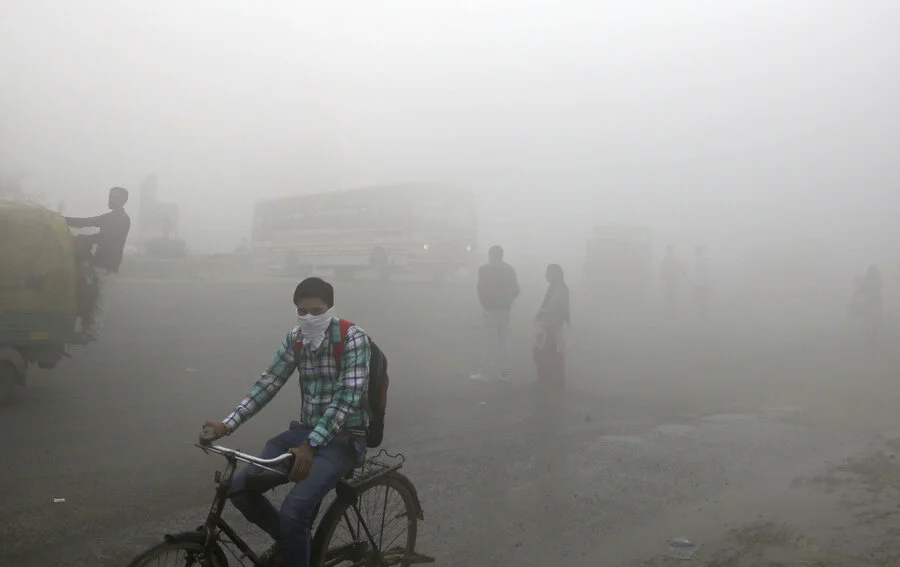
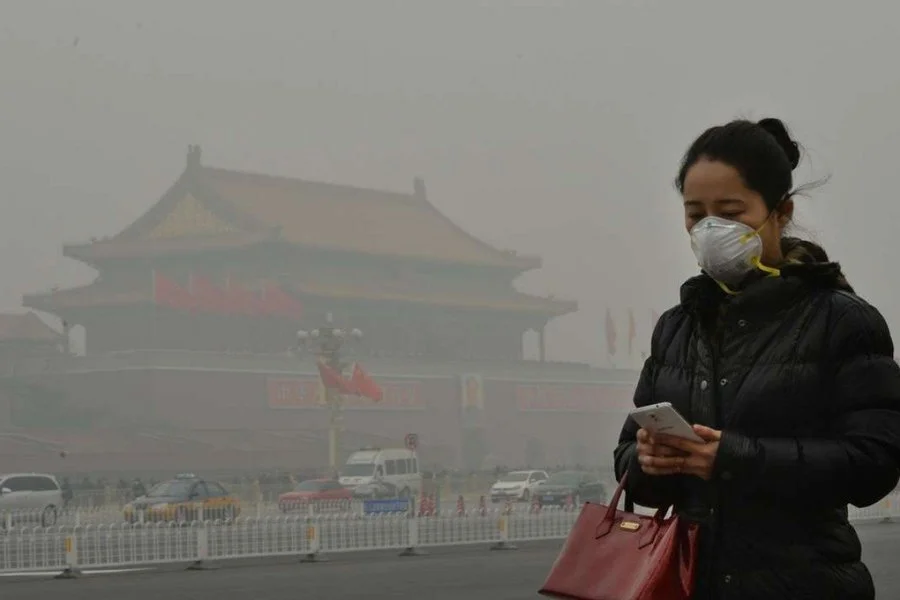
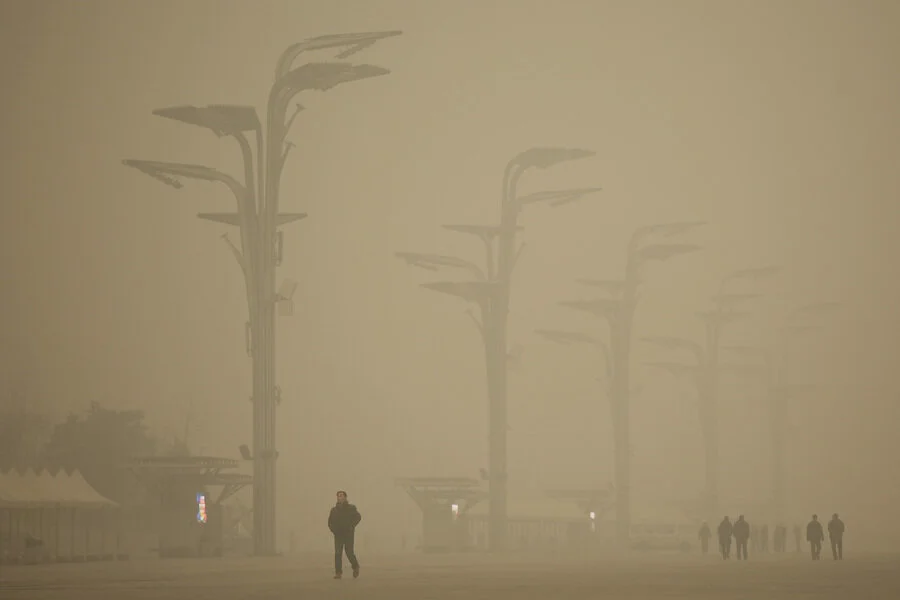
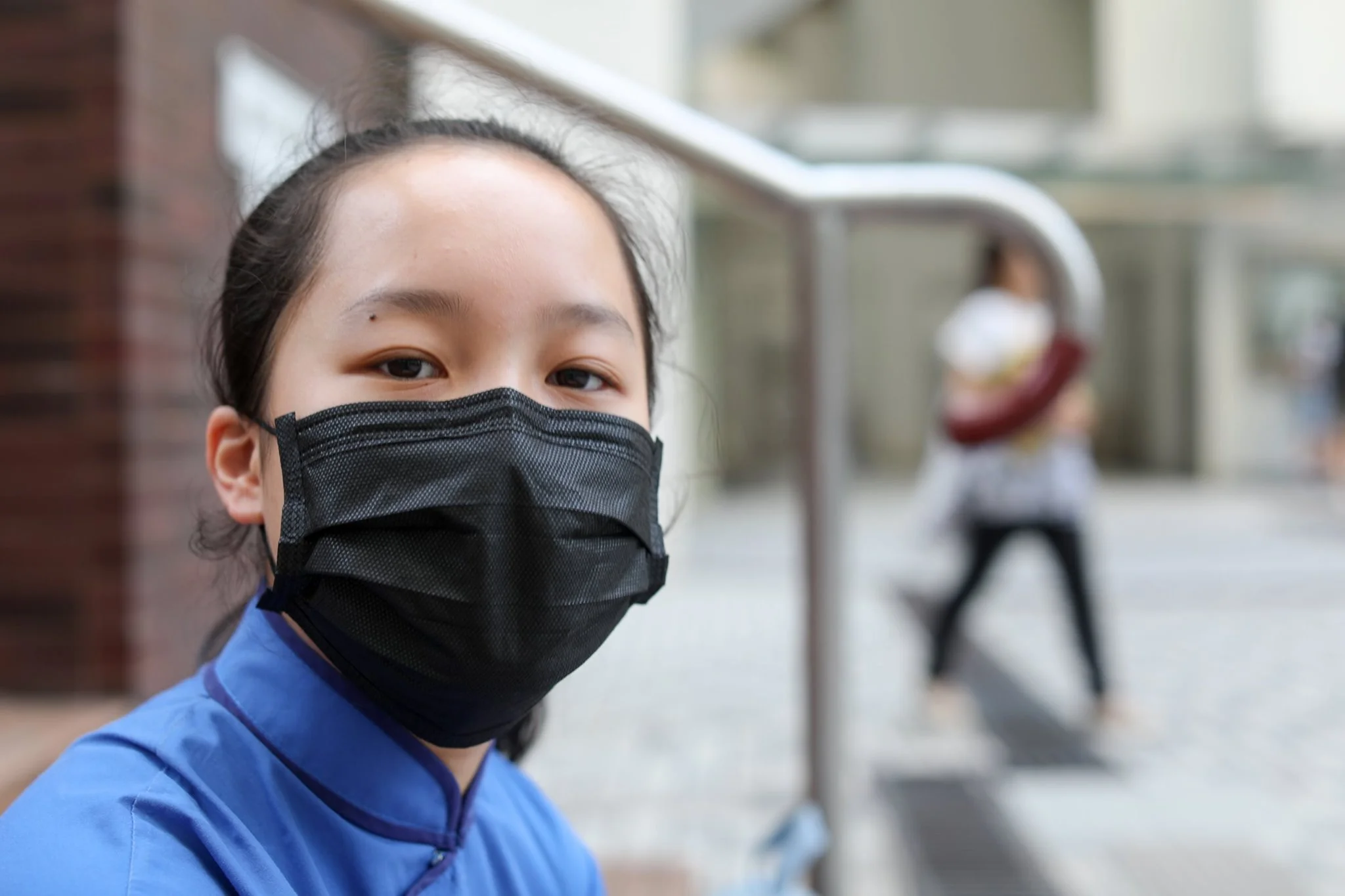
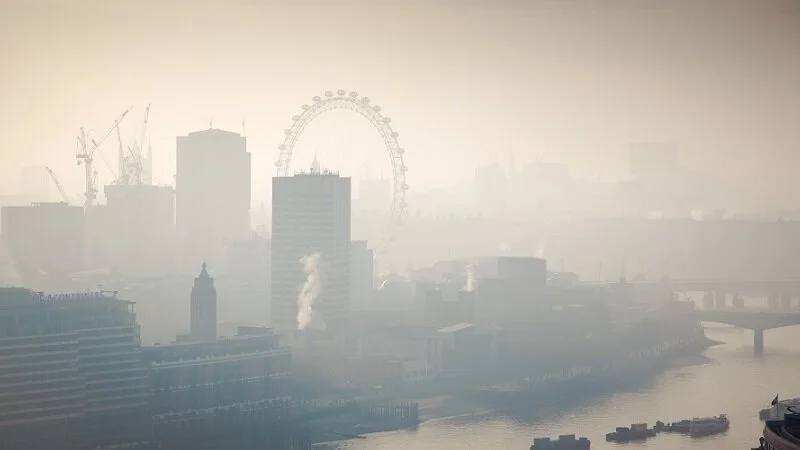
I also looked at images of people around the world living in smog. Before COVID-19, these images might look like something from a sci-fi movie to many westerners, but in many areas of the world, people face extremely hazardous air quality conditions.
An Experiment
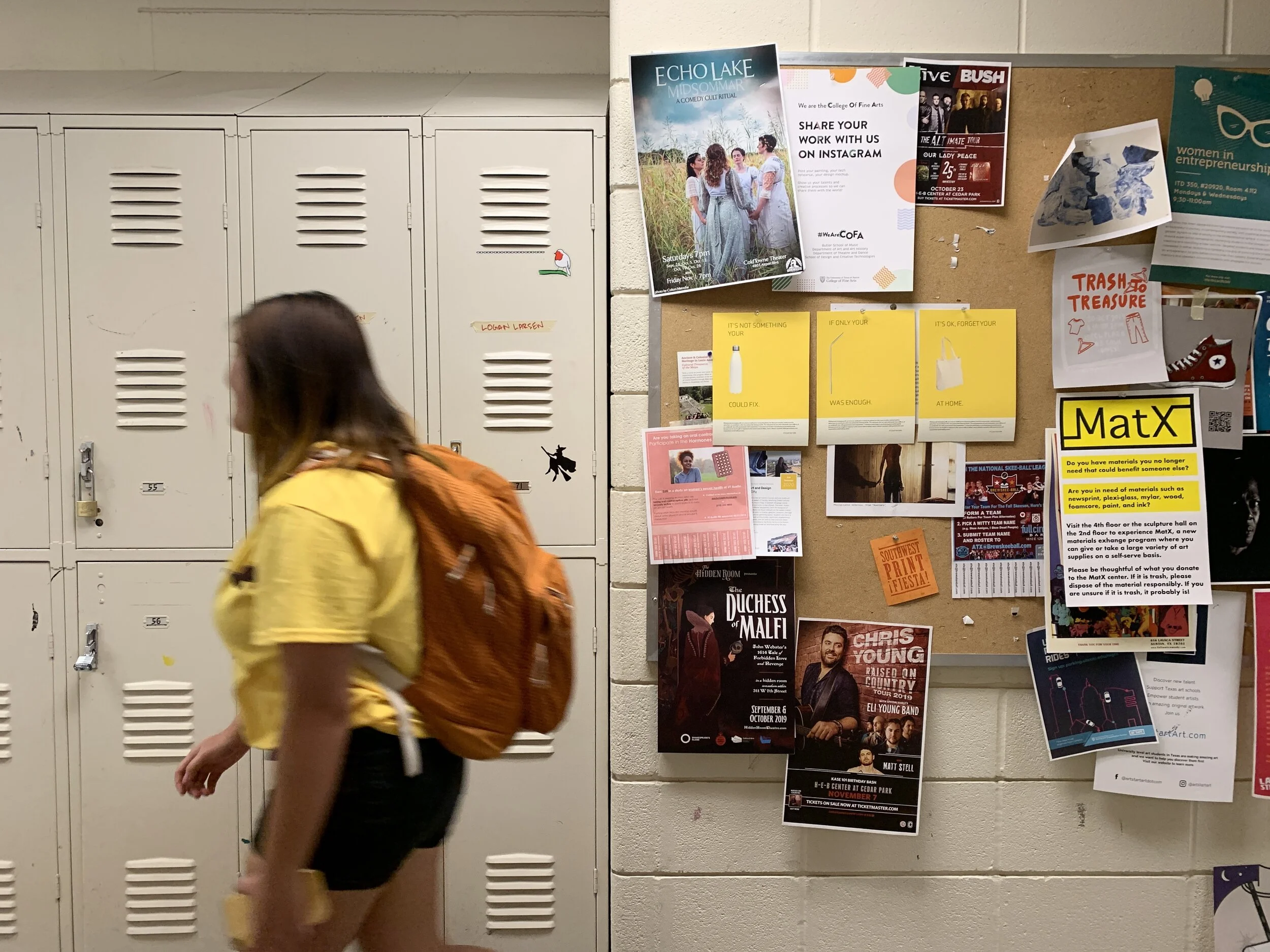
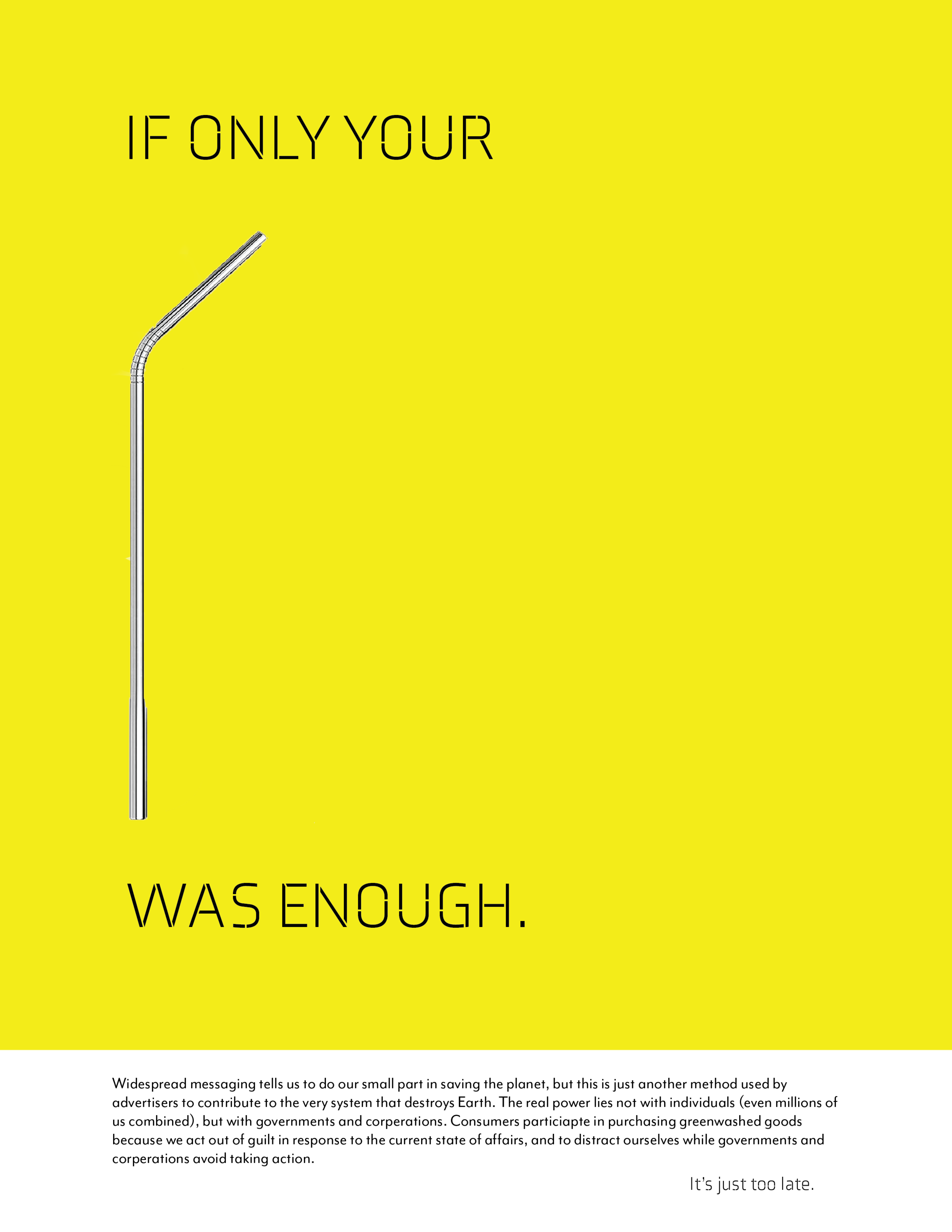
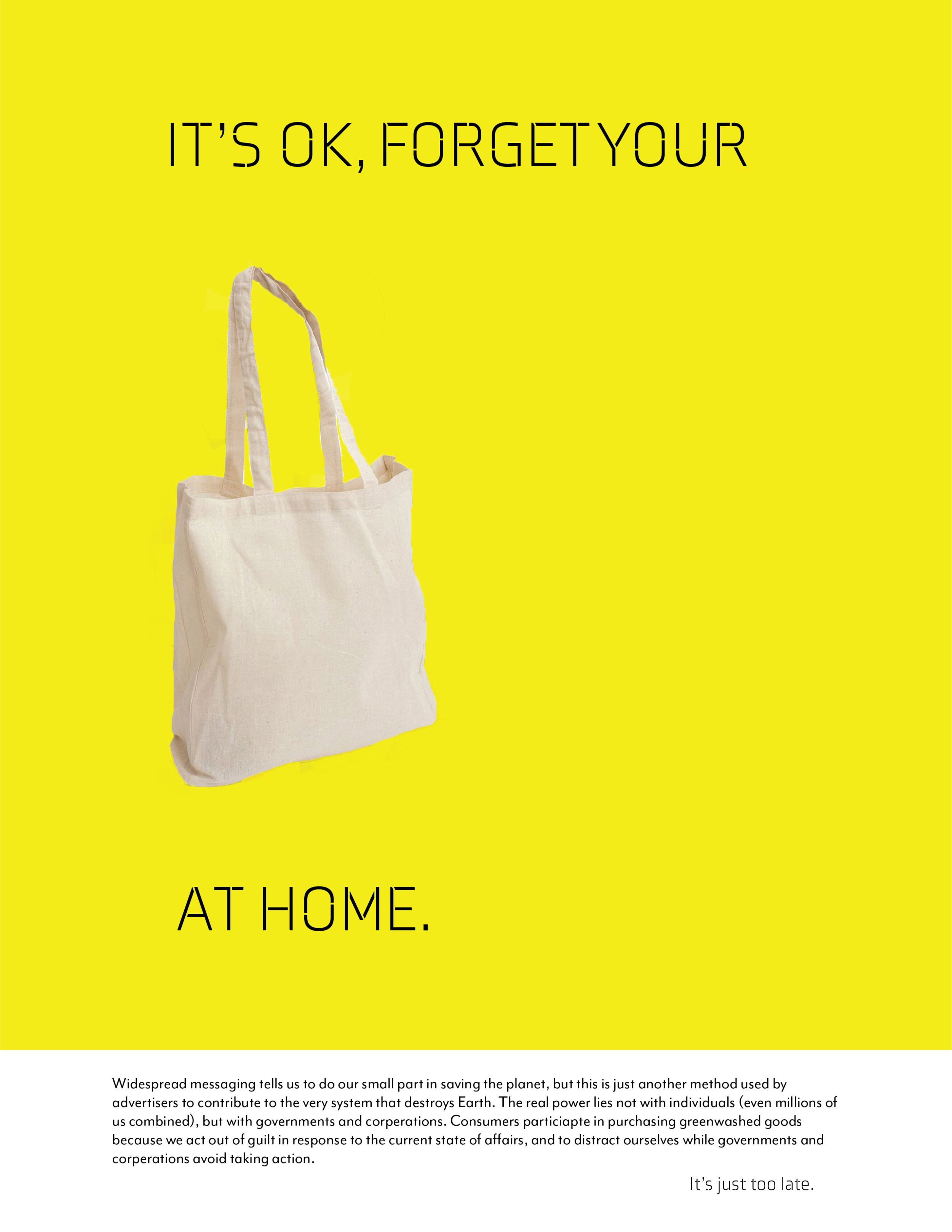
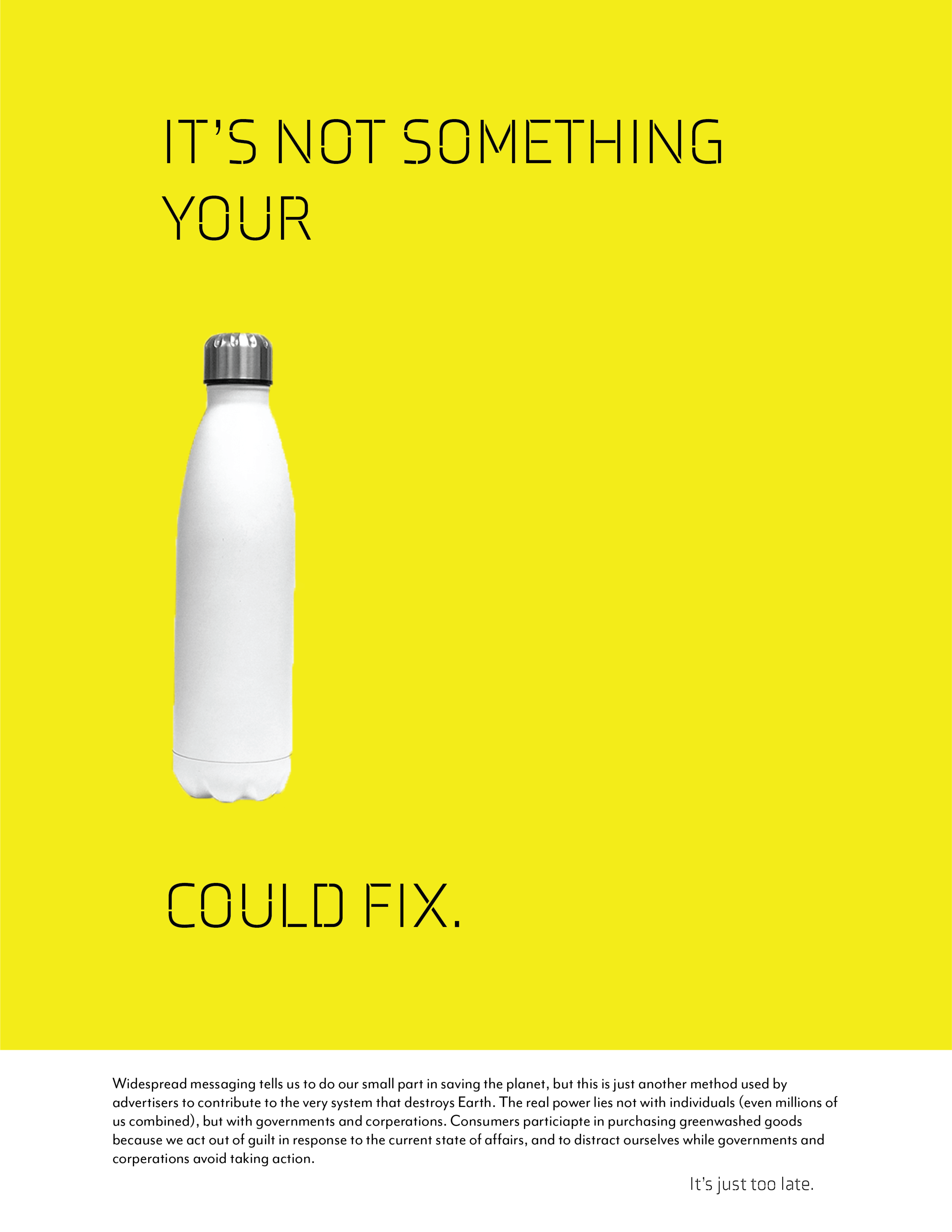
I attended a workshop hosted by Bureau for Experimental Ethnography called Greeting Cards from the Anthropocene. Here, we created satirical greeting cards with messages like “Wishing you well … unless you still use plastic water bottles,” and “My condolences ... on your imprisonment for crimes against the Earth.”
Inspired by the workshop, I designed a poster series as a prototype for my message. Using a cynical tone, I attempted to communicate that individual contributions, while noble, are not influential enough to reverse the damage to our planet.
While the message was clear enough, the series was unsuccessful. Urging people to recognize the futility of individual conservation efforts was not only too cumbersome, but also a problem rooted too closely to present day. A message of “it’s too late” spurs apathy, not action. In the end, I wanted to show people what it might be like to live with the drastic consequences of climate change.
Something as simple as checking the weather could become crucial. Using the power of subtle contrast, even practical matters can appear sinister. In this imagined future, a new weather application, Day Rise, becomes a critical part of each morning.
The Future in Context
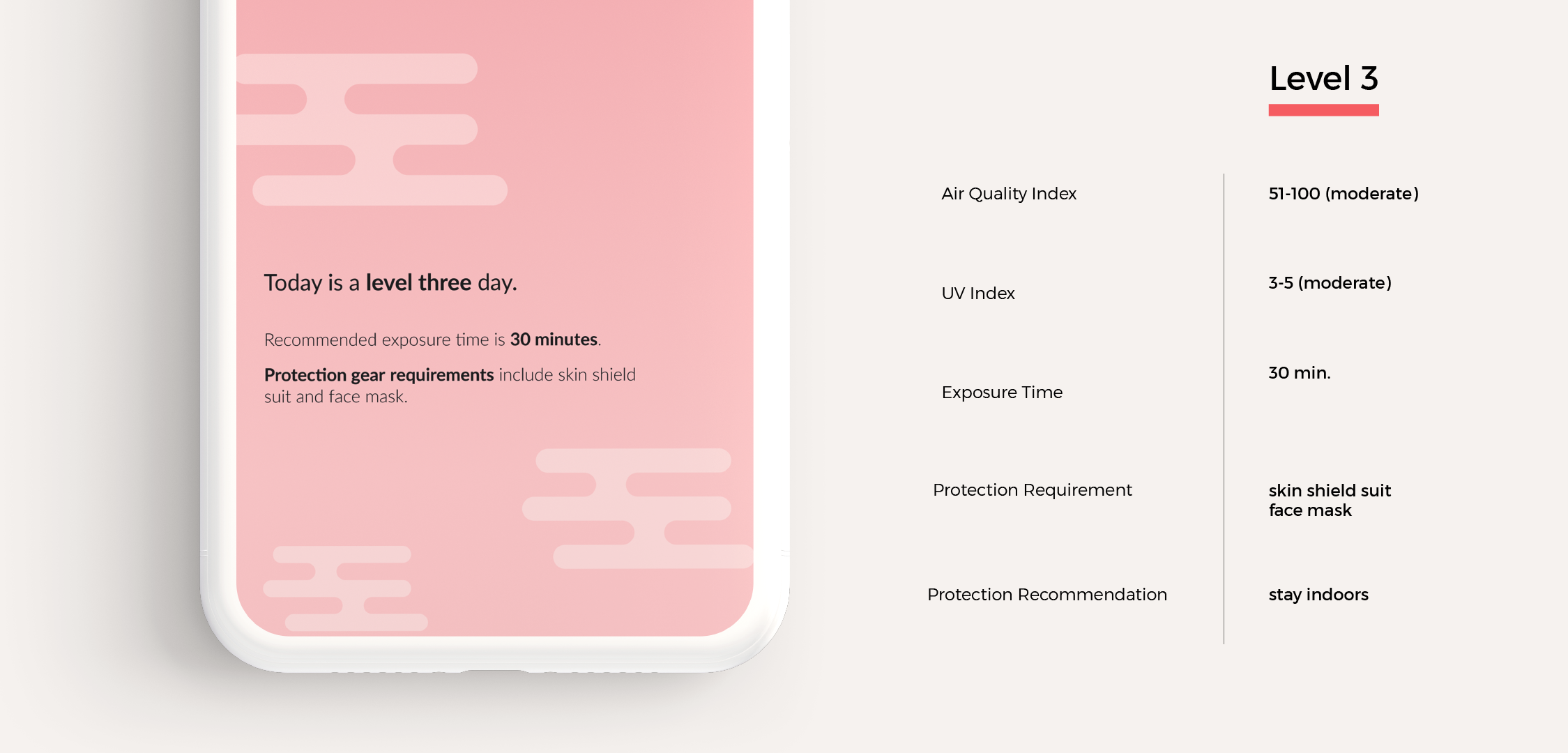
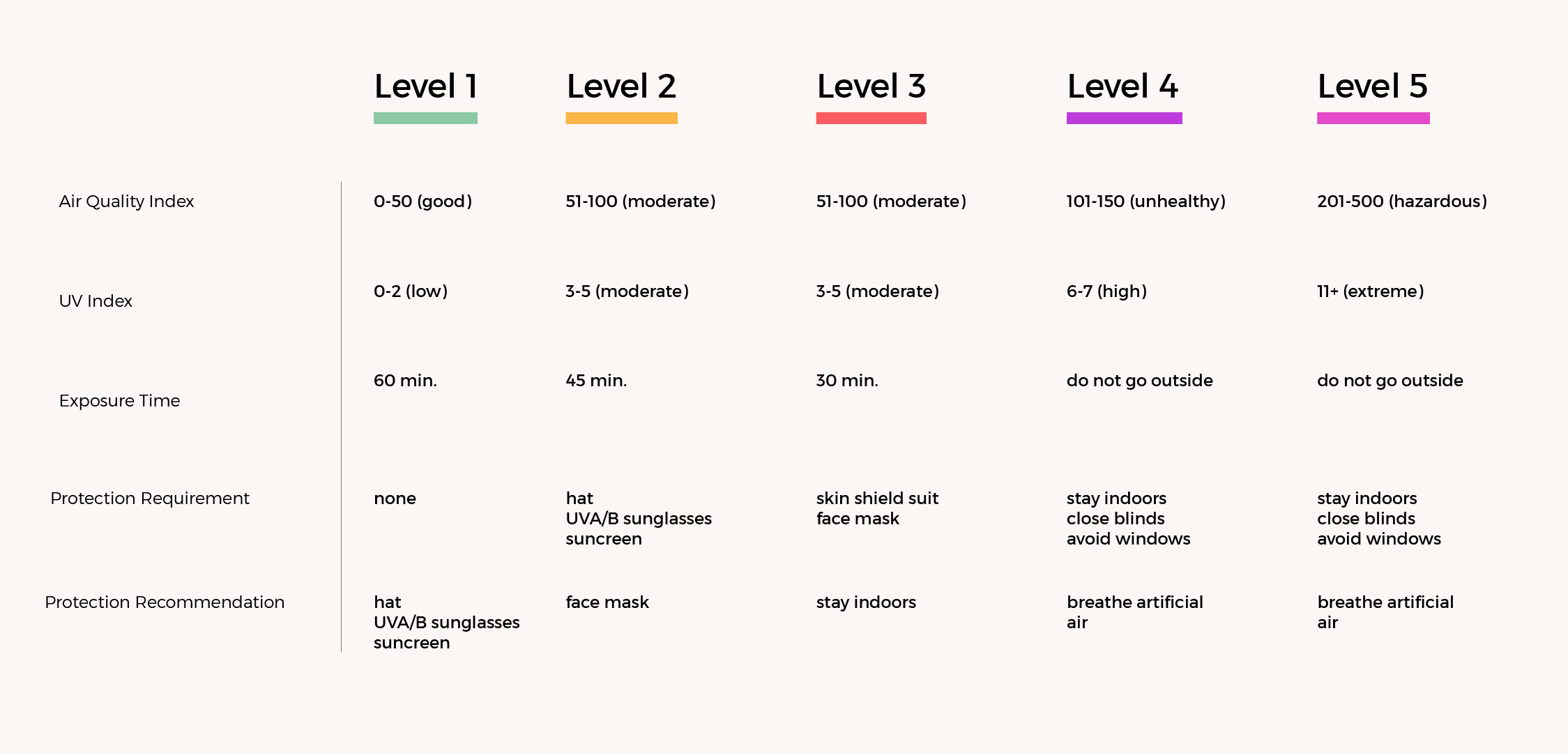
The basis for my application is a system I created called the Public Weather Safety Index. Combining existing measurements like Air Quality Index (AQI), UV Index (UVI), and exposure time, along with some that I made up myself, I create a system that operates from levels 1 through 5 to communicate the severity of the weather that day.
Weather Application Precedent
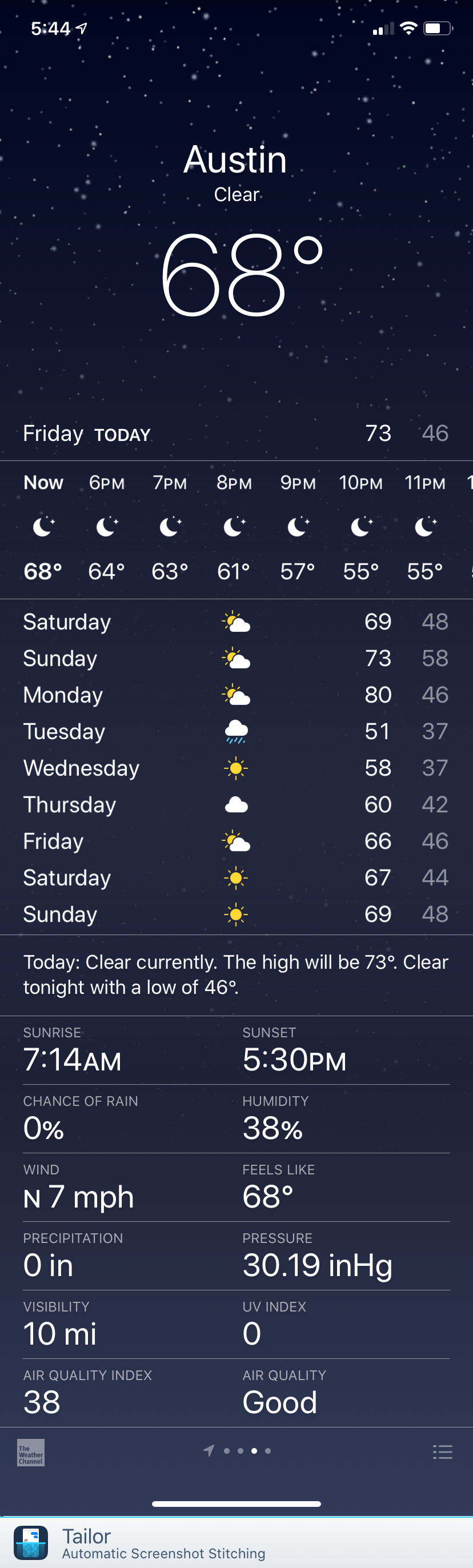
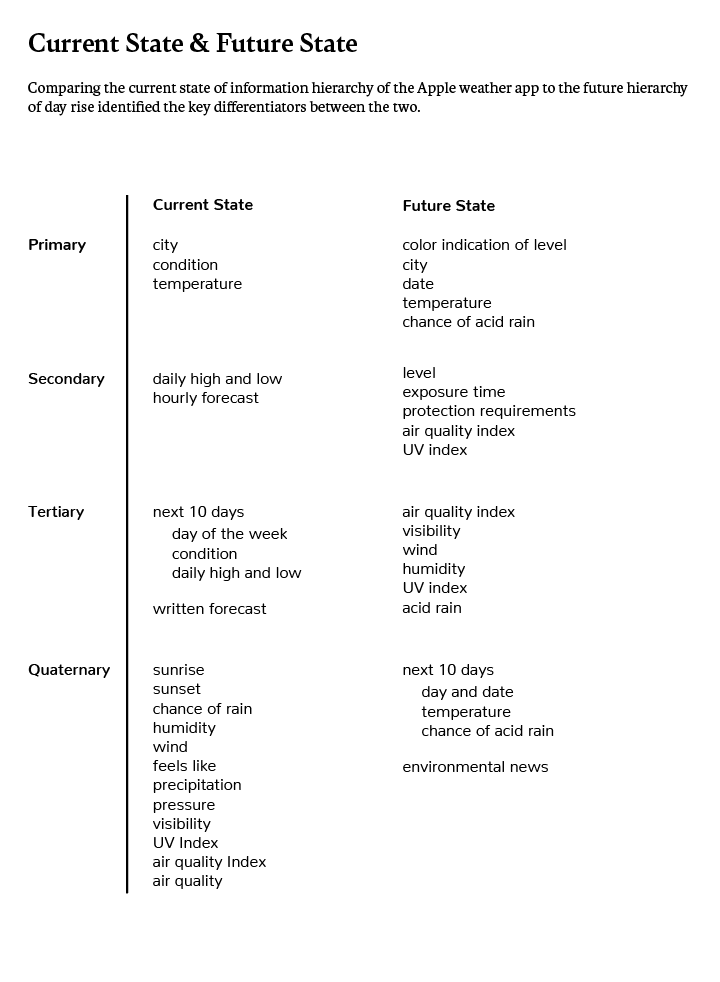
I looked at the Apple weather application, making note of the hierarchy of information. I wanted to think about how this information would be restructured in my application. For example, information like the daily UV index currently lives in the quaternary tier of Apple’s app, but in the future, this information might live in the primary tier.
My findings are not necessarily indicative of the final product, which changed from this structure through many forms of iteration, but it did help me begin to organize my app in a way that made sense.
Low Fidelity
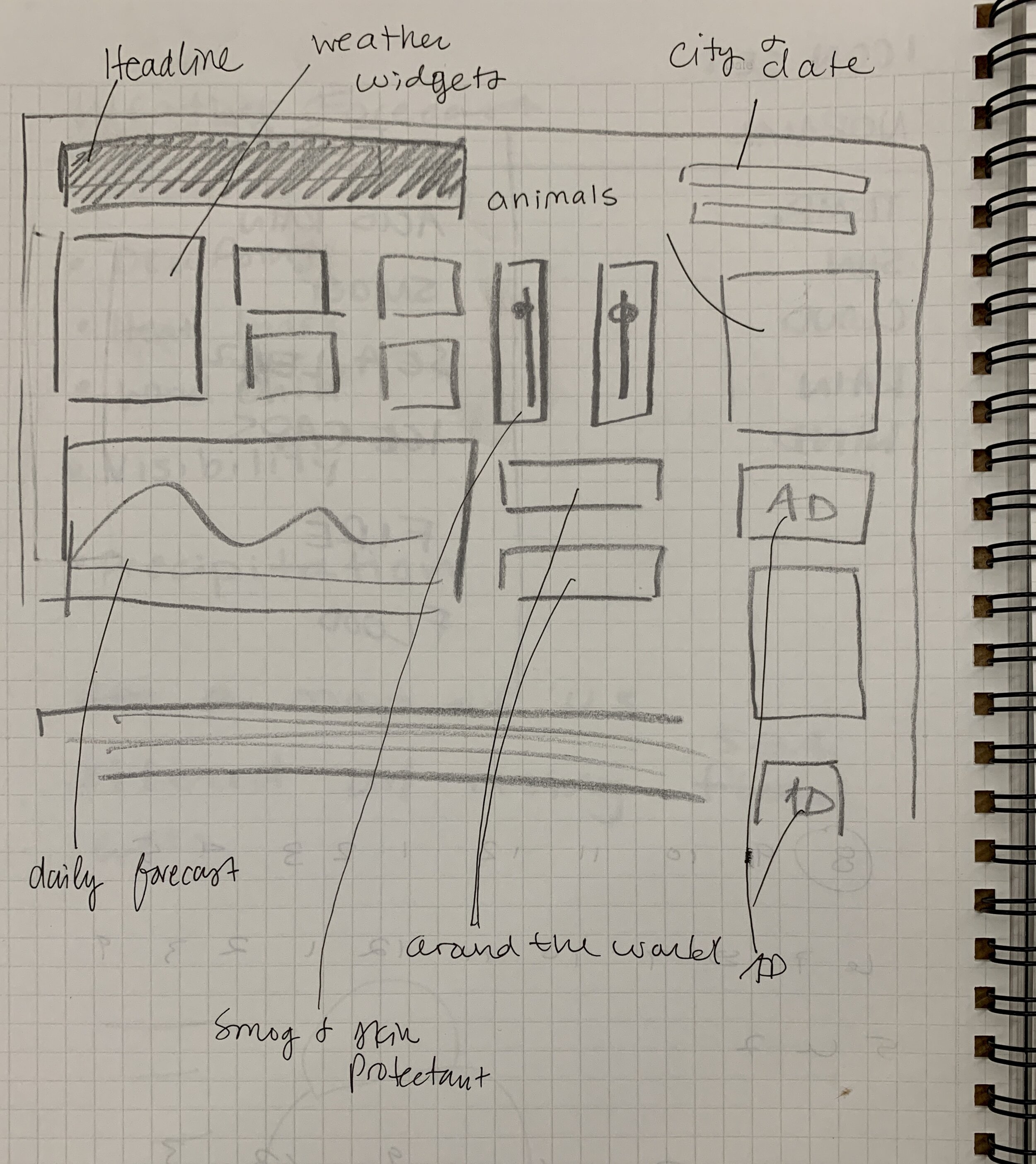
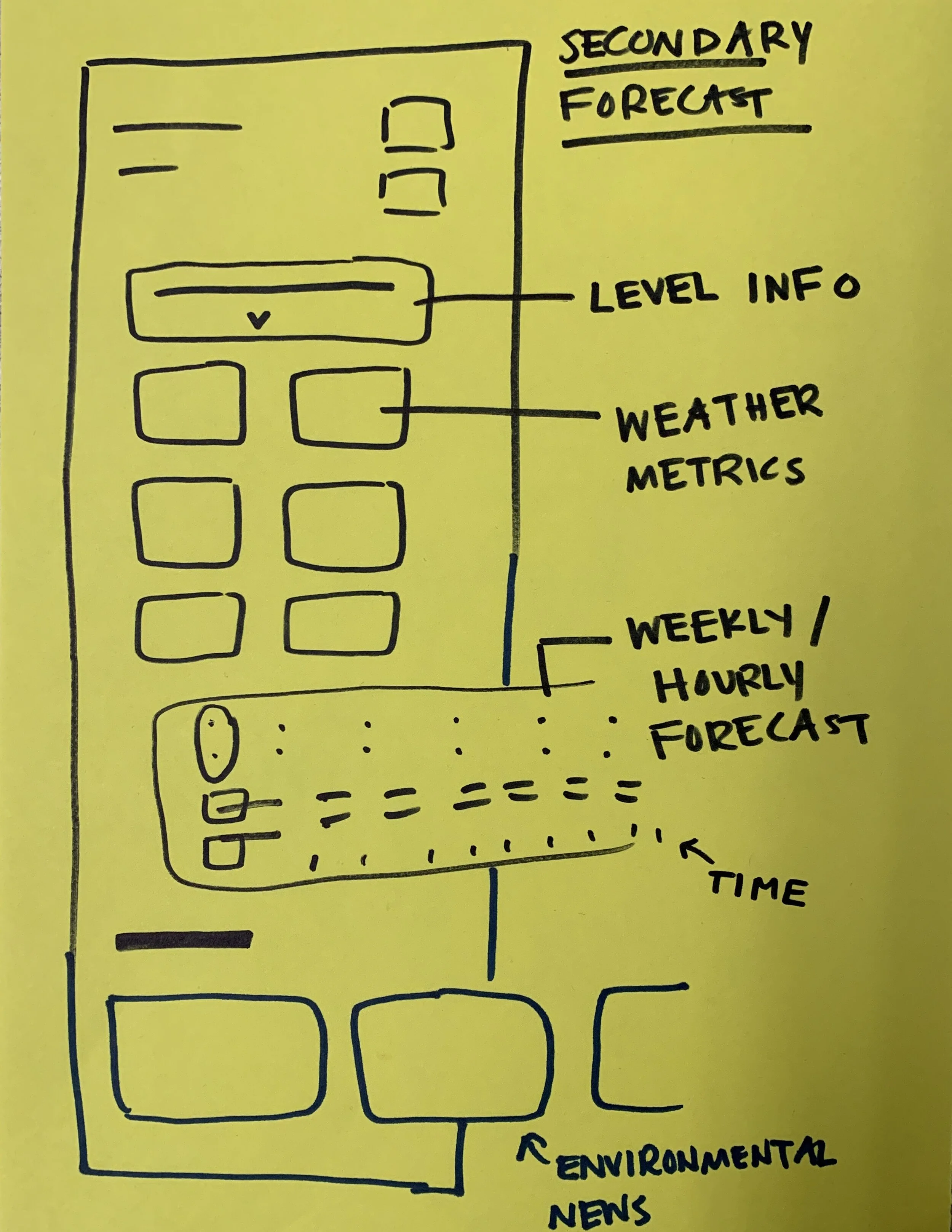
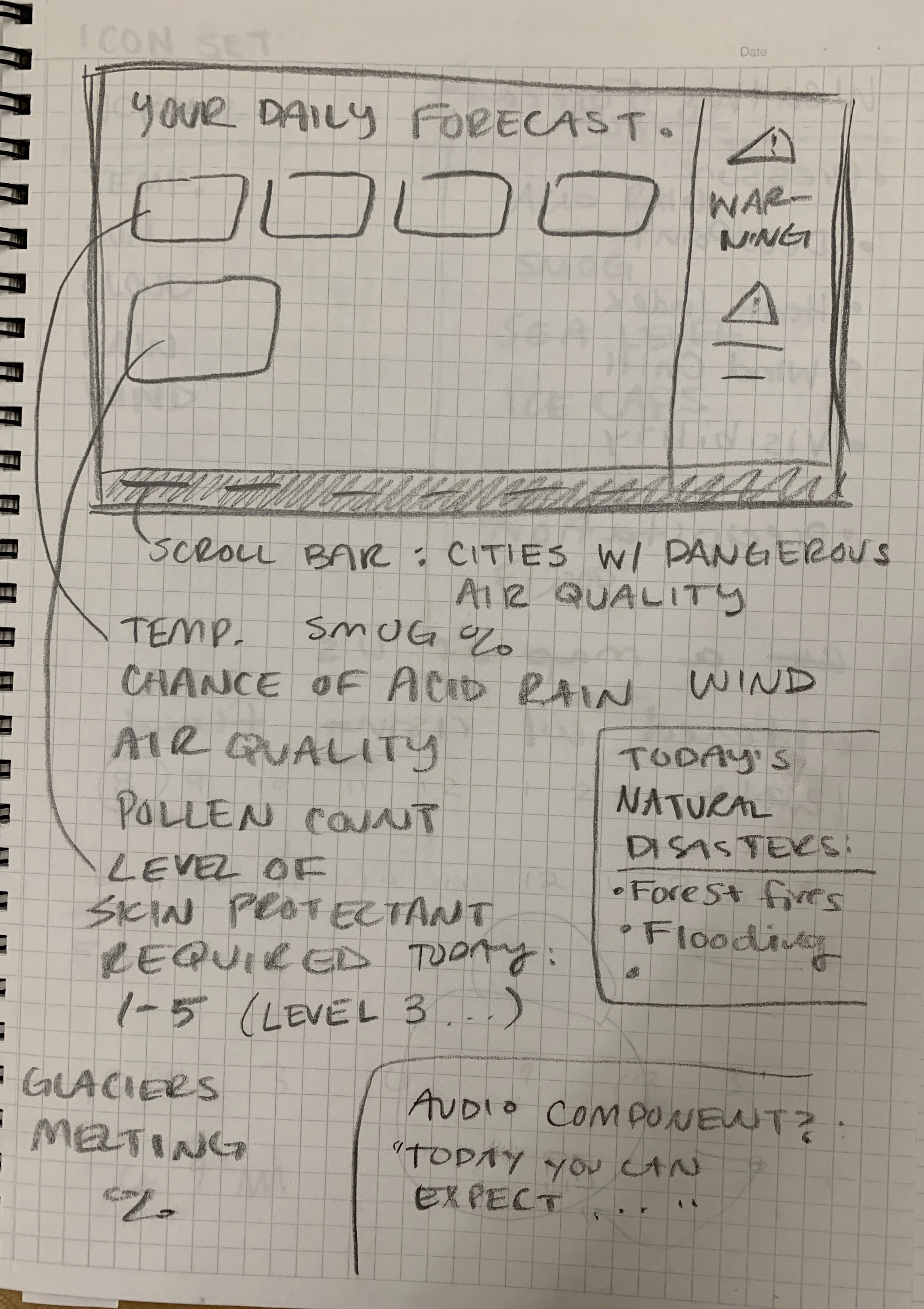
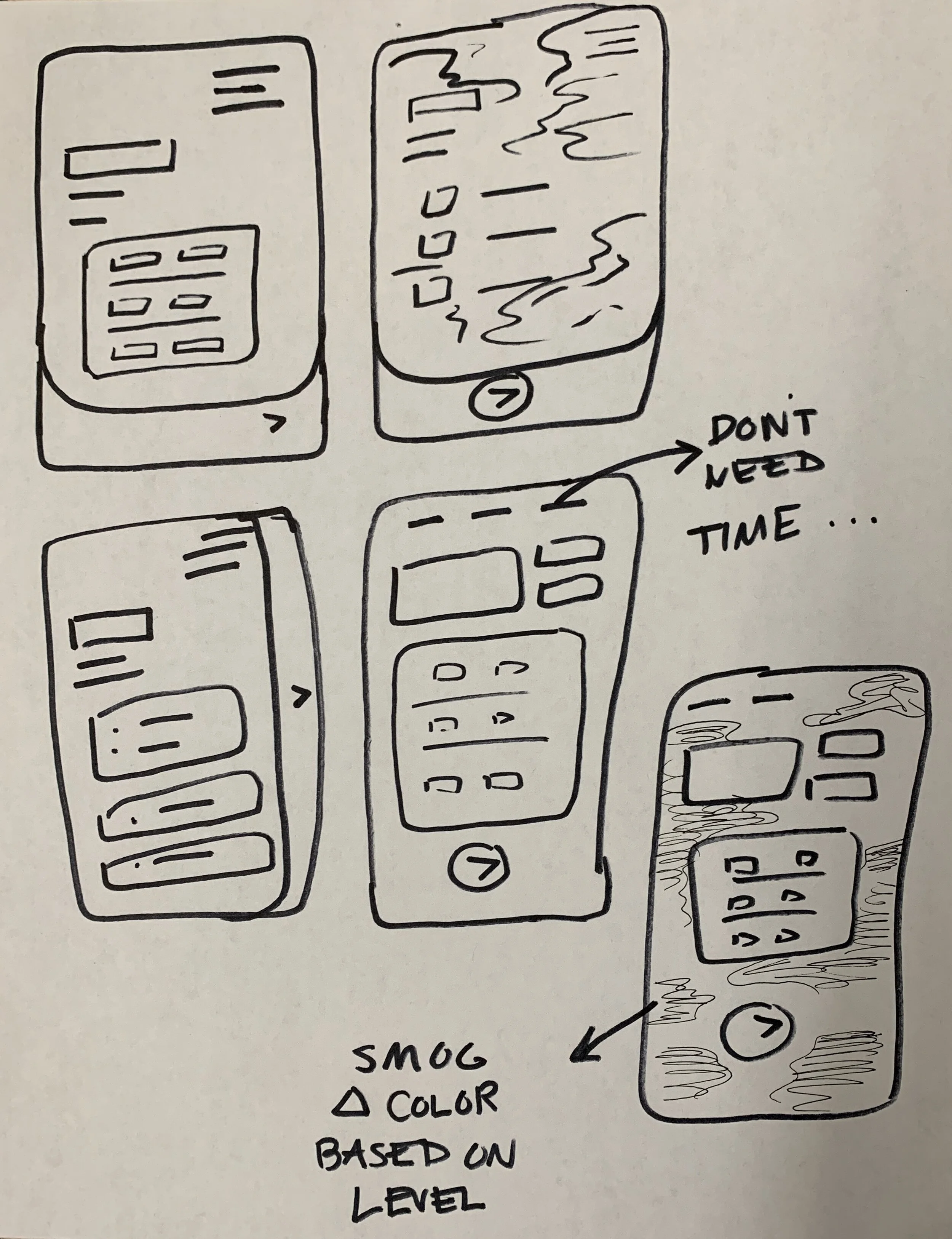
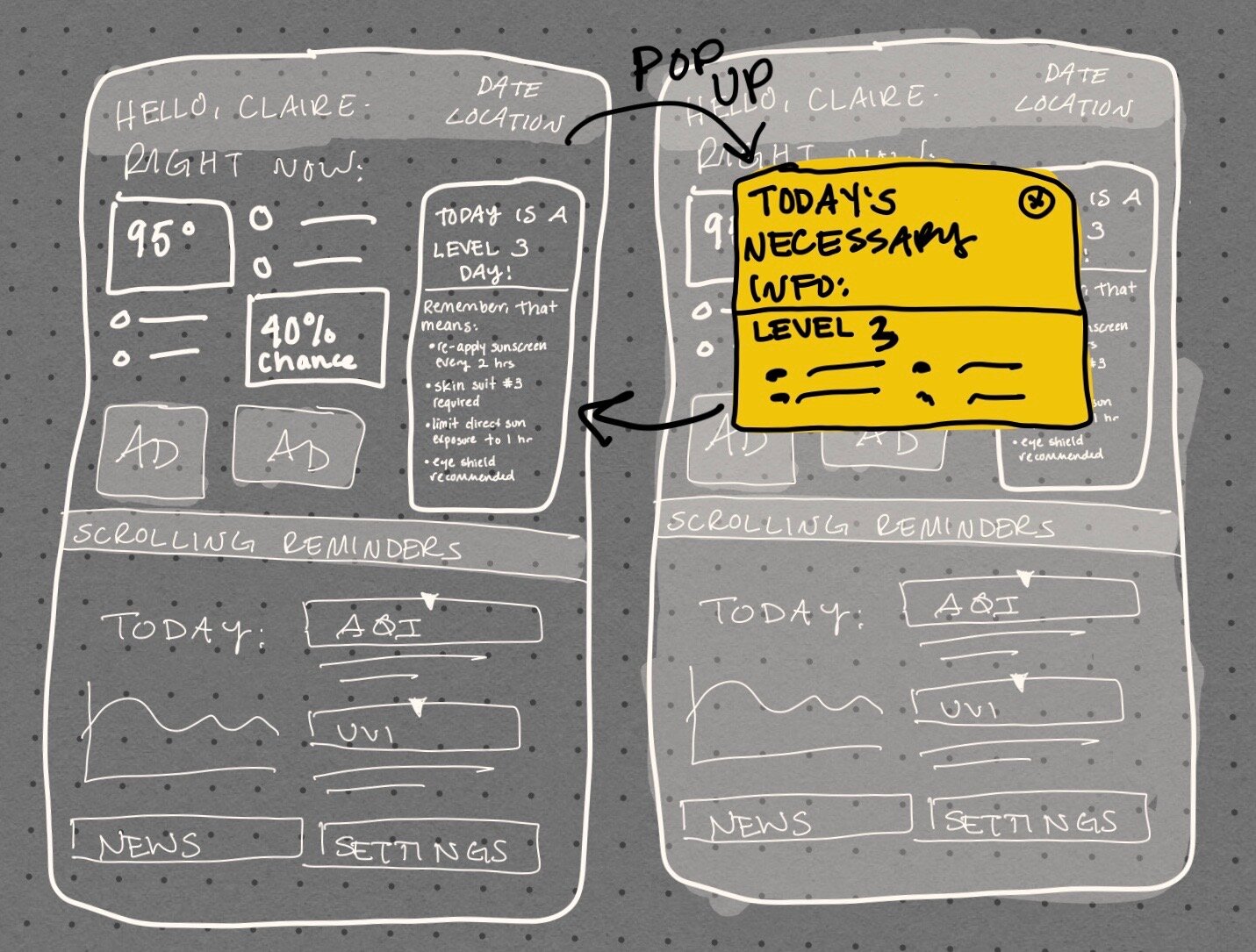
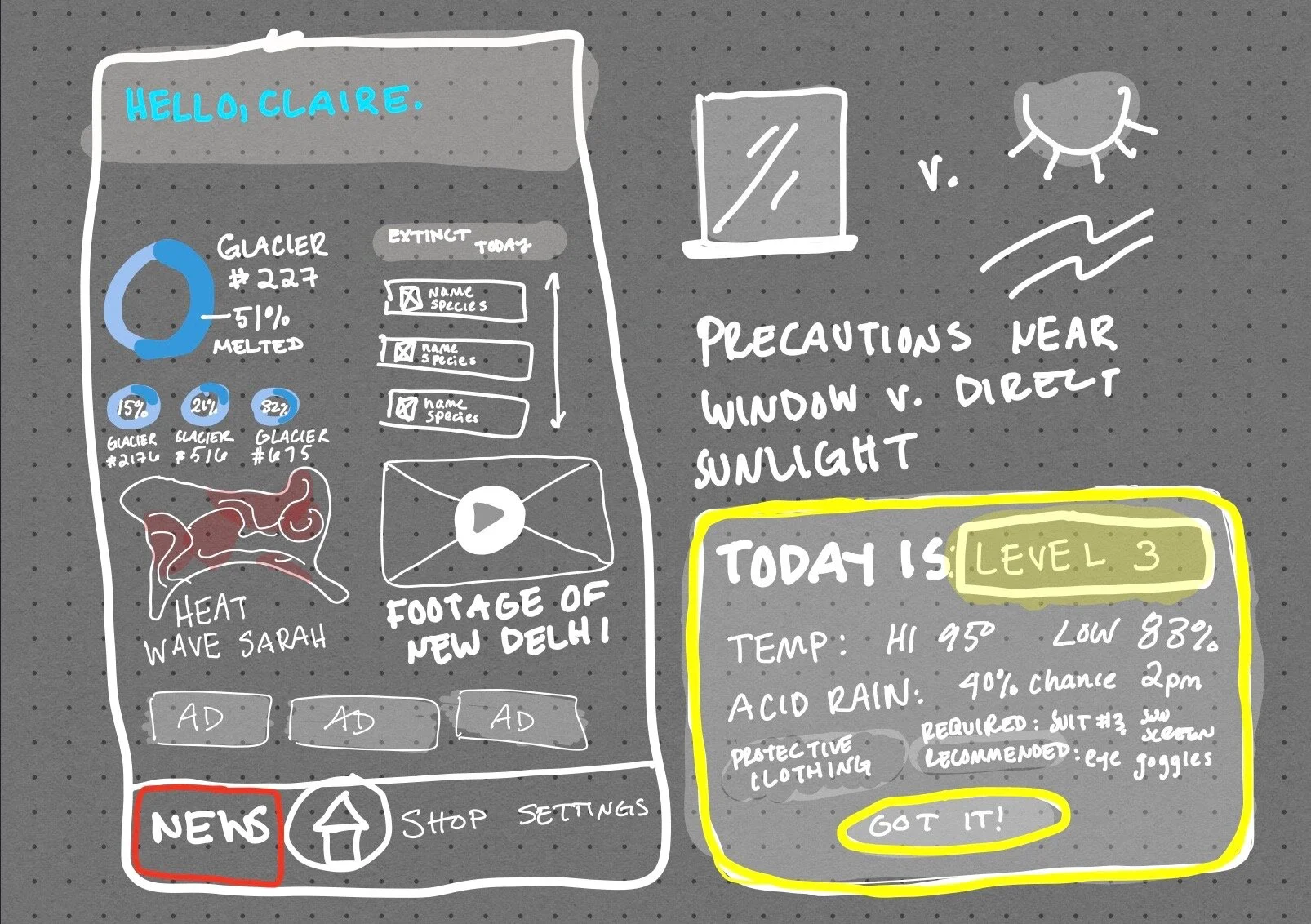
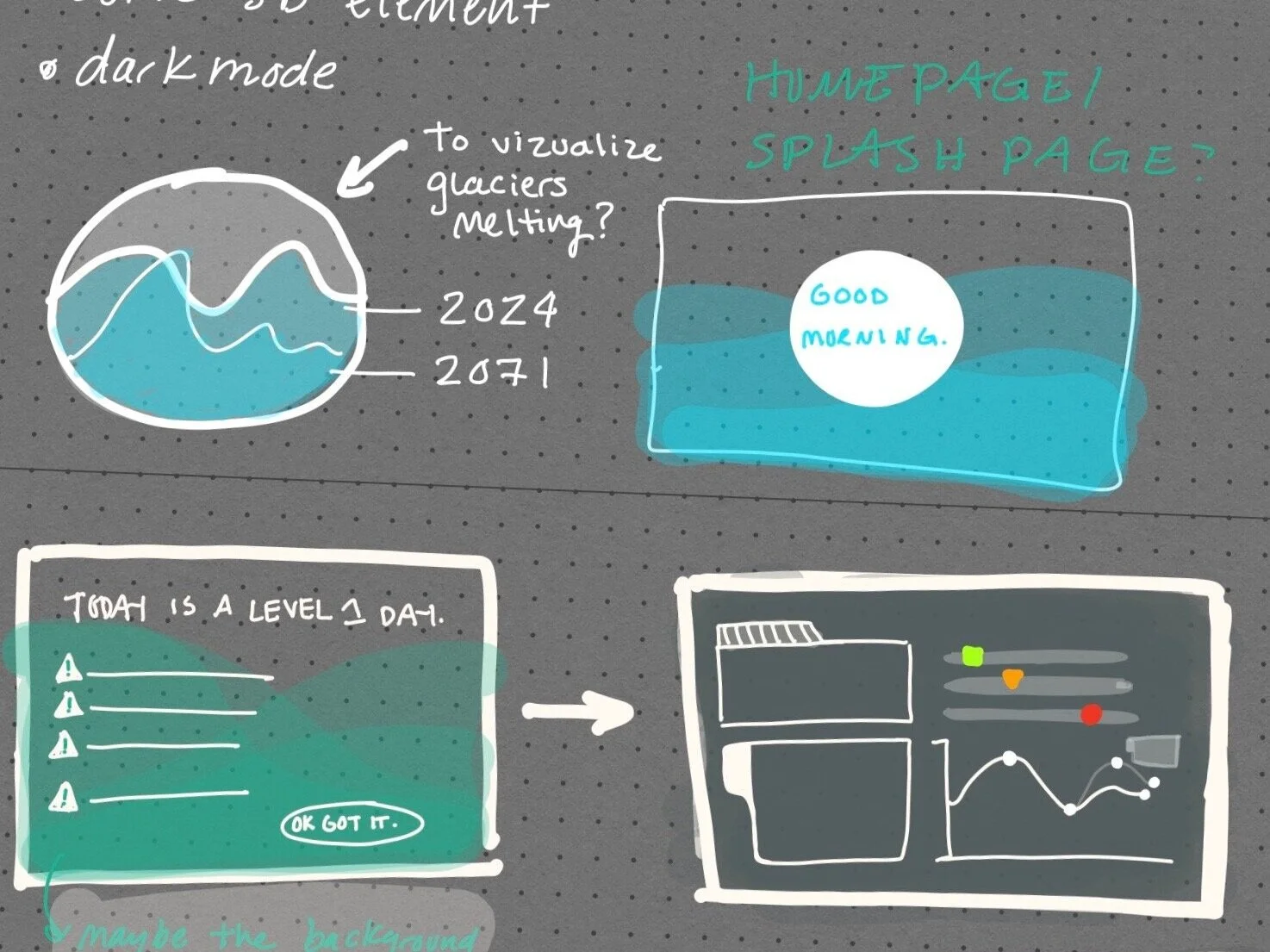
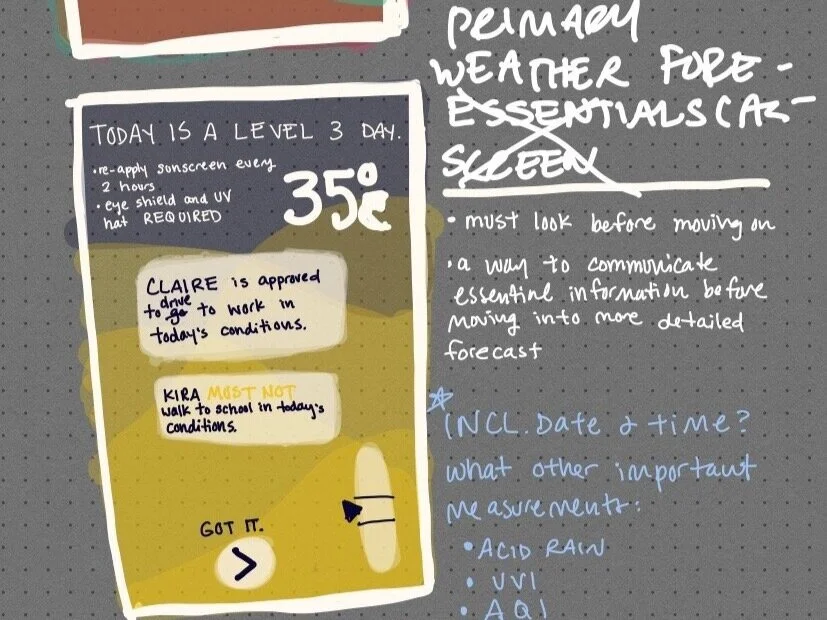
At this point, I wasn’t sure if my project would manifest into a mobile or desktop app, a dashboard, or what amount of information it would contain. I started with pen-and-paper sketches and then moved to sketches on my iPad to start to imagine the layout, hierarchy, and overall aesthetic.
Mid-Fidelity
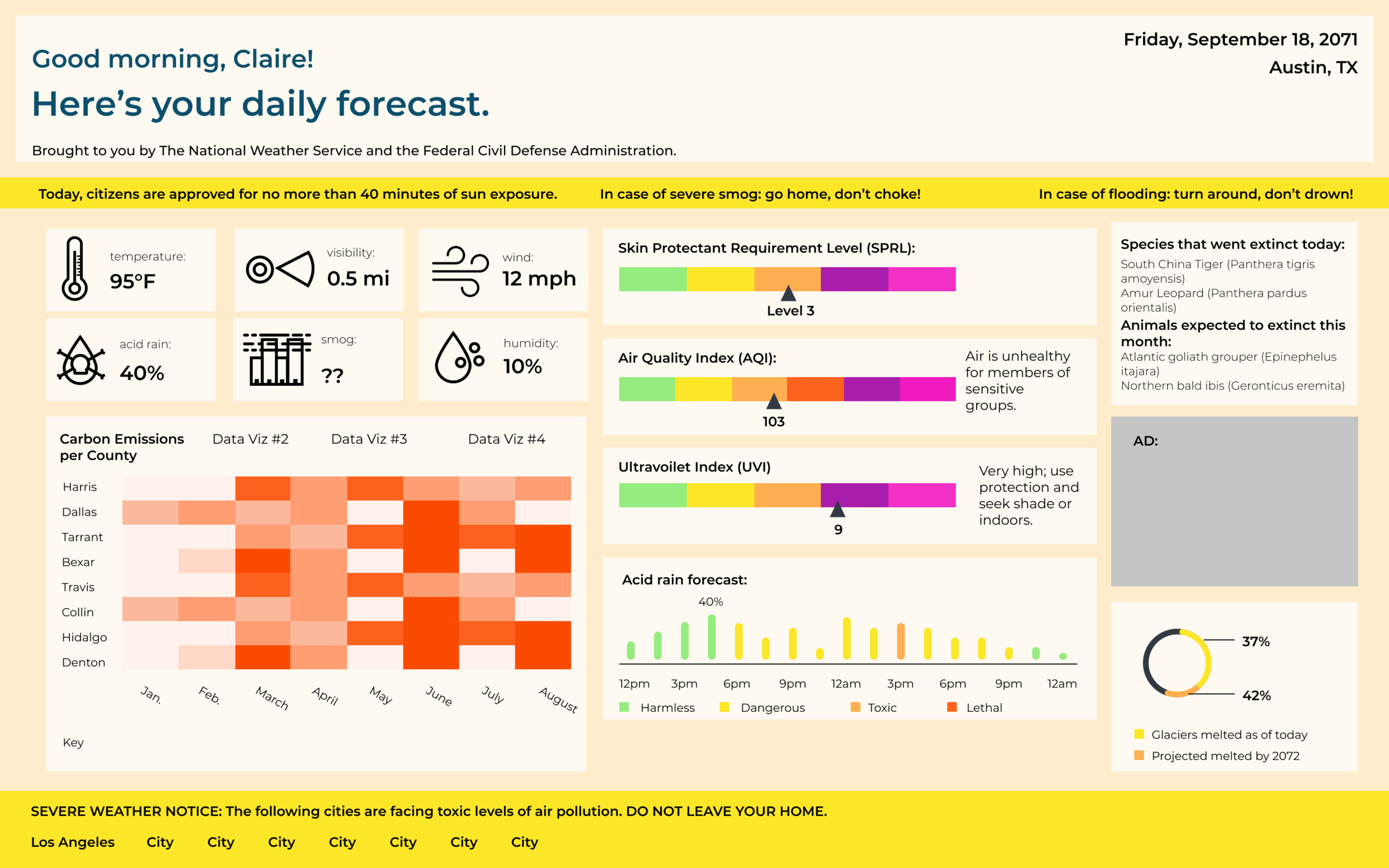
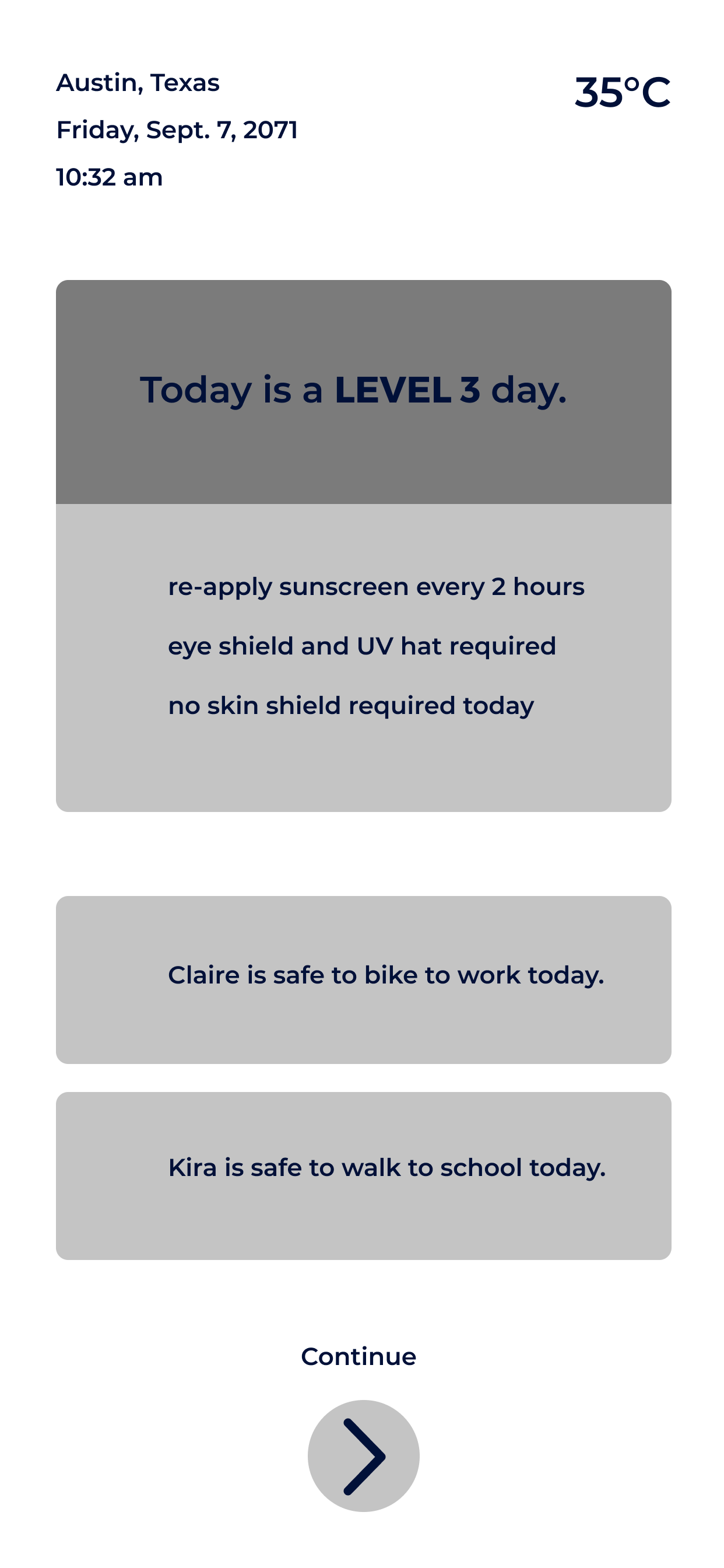
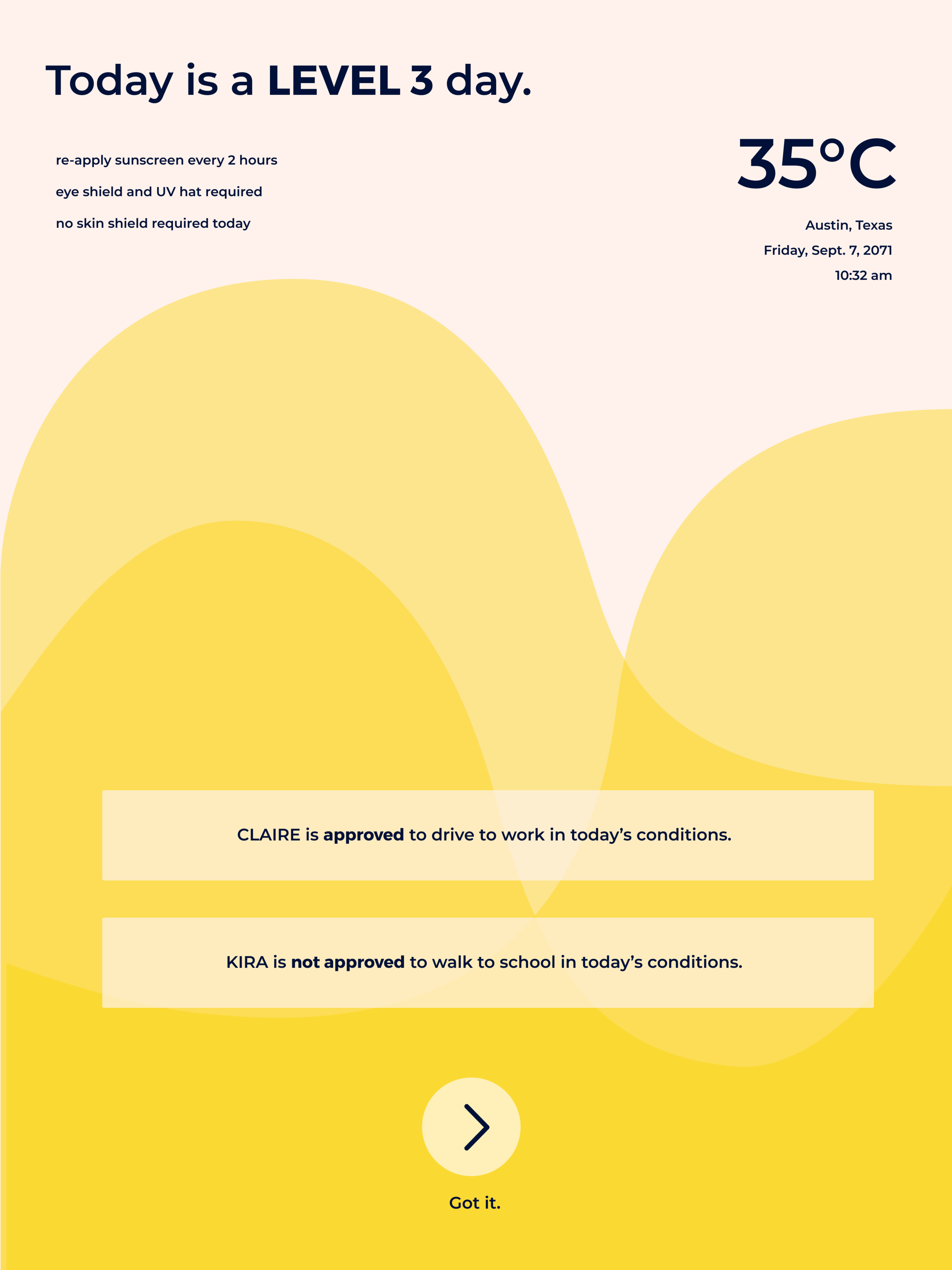
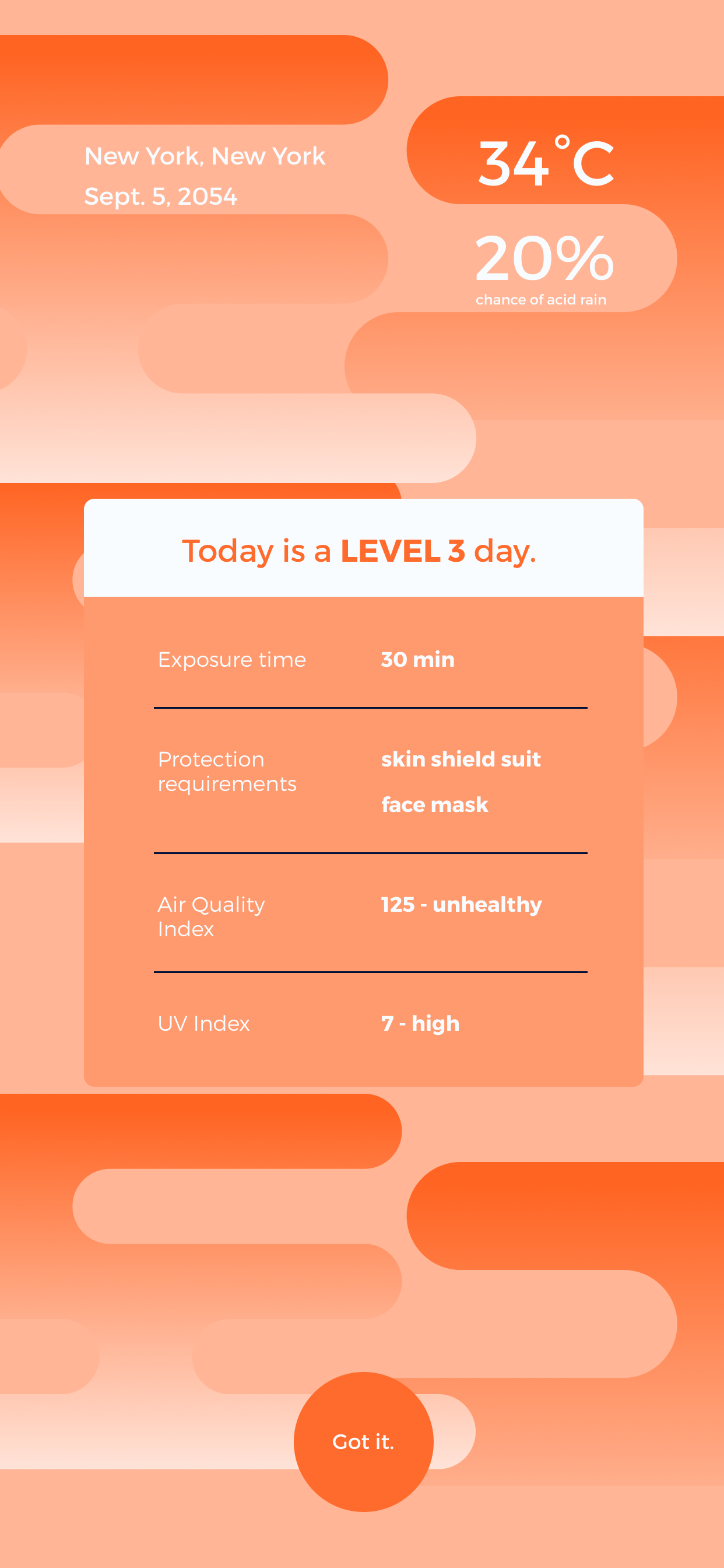
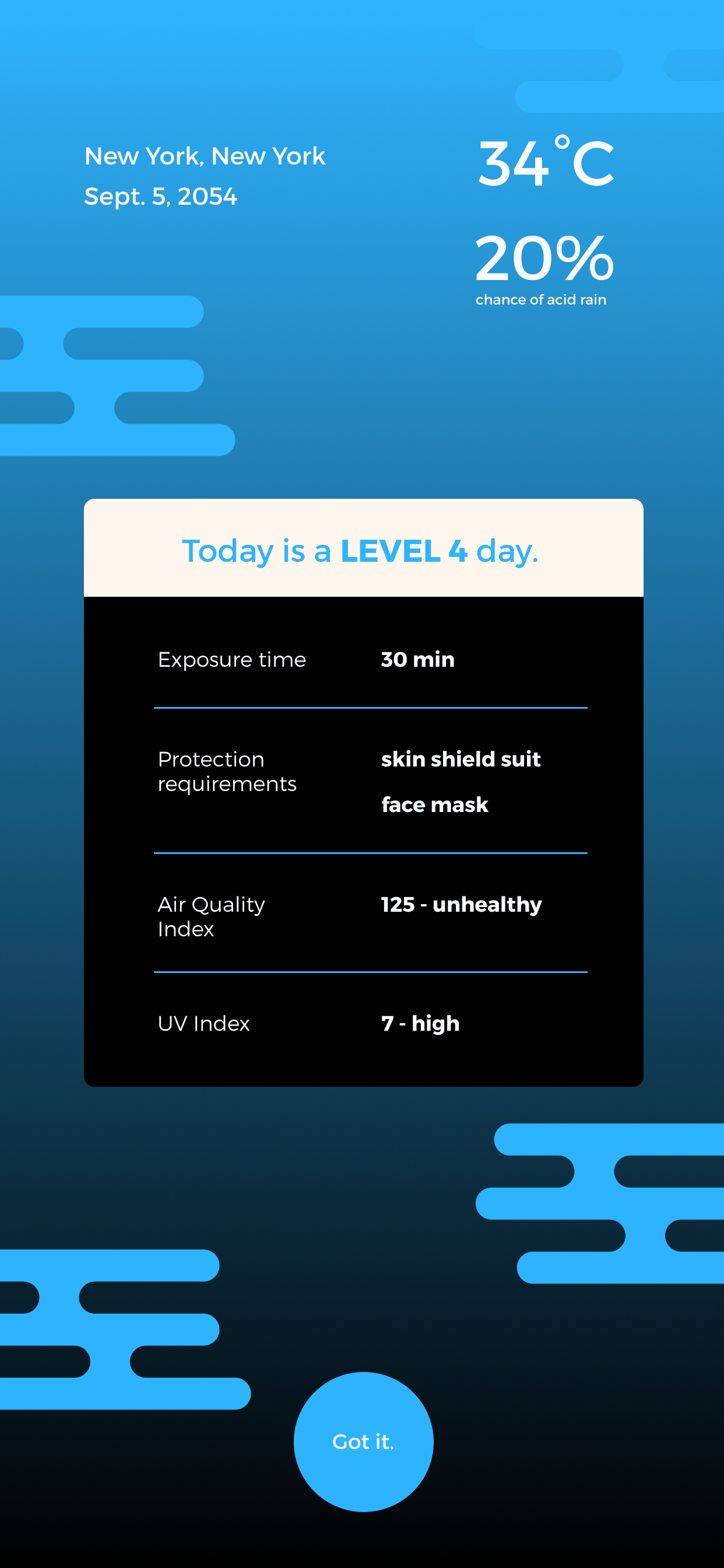
I decided on a mobile app and moved into Figma for mid-fidelity wireframes. These wireframes started to include color and text, as well as considered my personas. I started to play with gradients, overlays, and a color scheme that reflected my weather index system.
Initial Iteration
After a first shot, I had a home page with a set of primary and secondary screens for each level of the index. While it was a good start, there were obvious visual and interaction problems with the prototype.
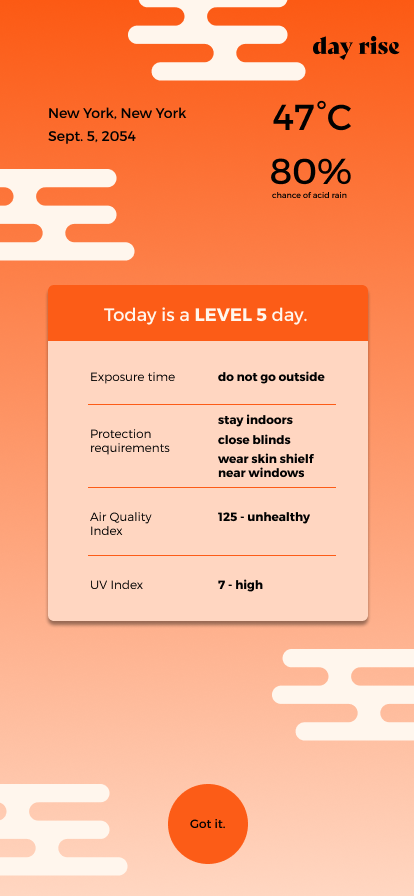
Final Concept
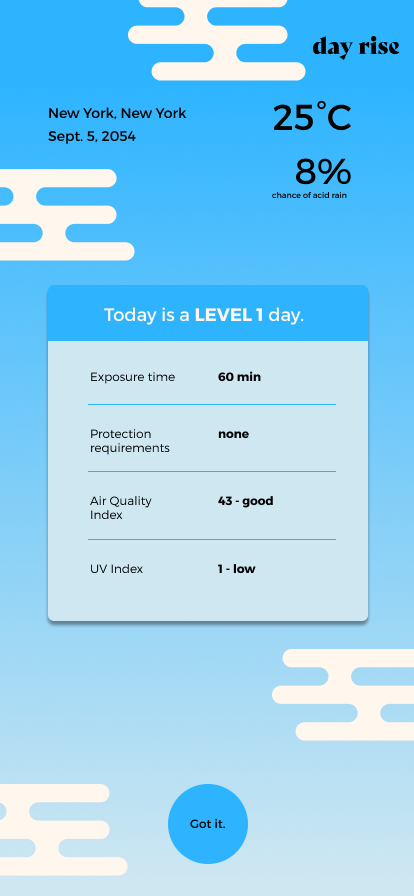
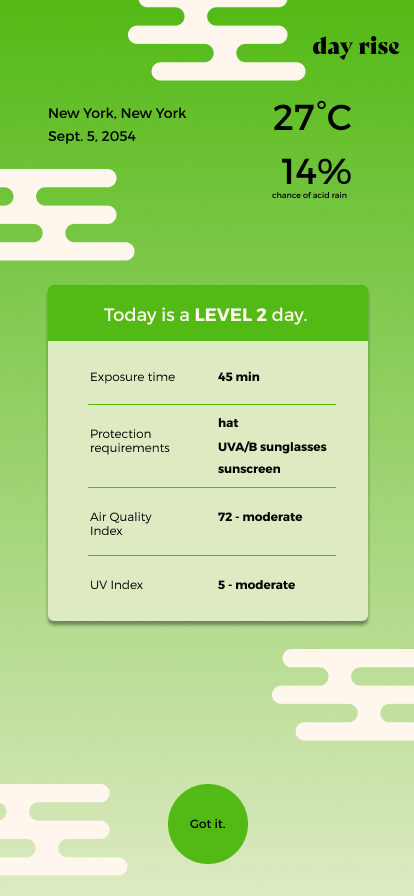
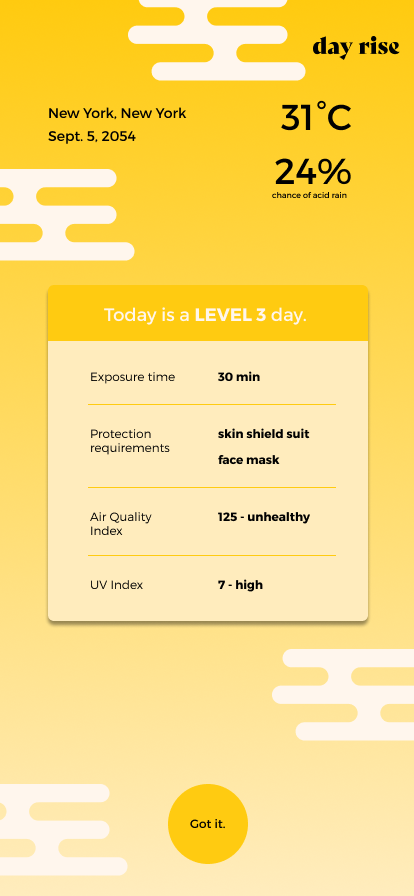
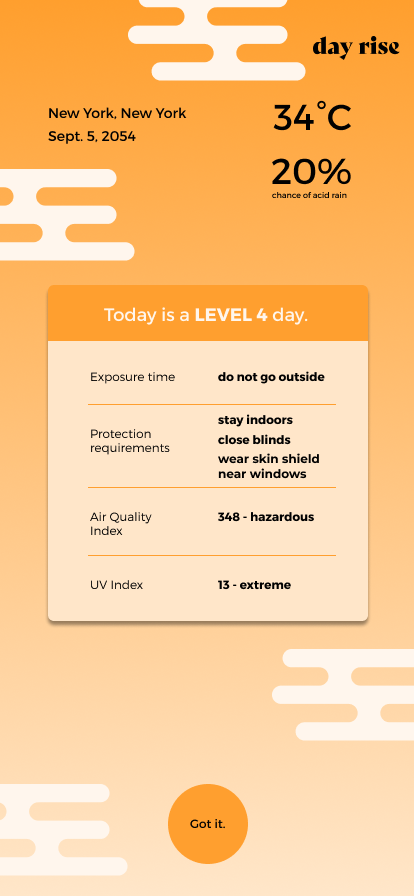
After another round of iterations, I reached a more refined version of my concept.
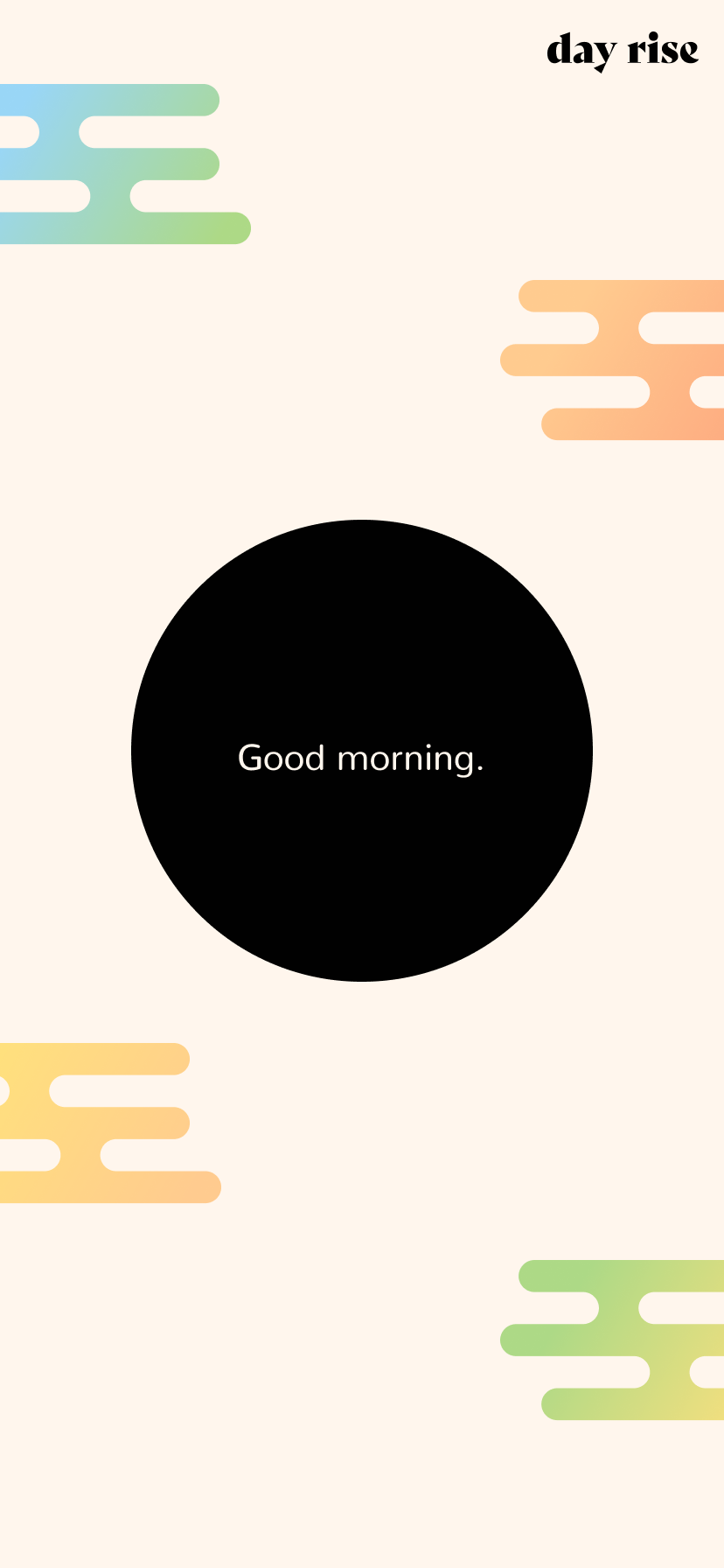
The landing screen introduced the color palette and smoggy cloud motif.
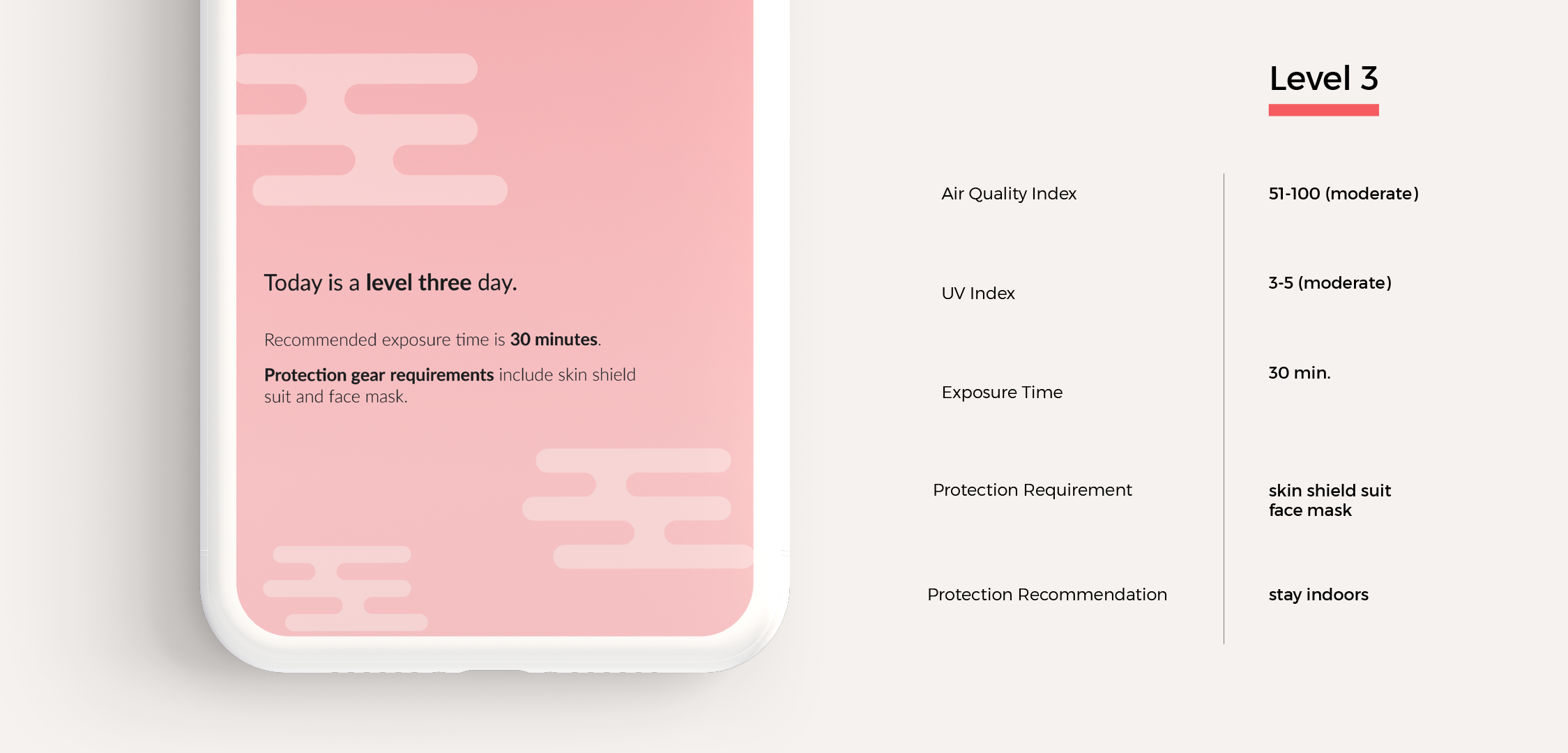
The app displays a daily weather forecast that corresponds to a level from the Public Weather Safety Index.
Scrolling down each page reveals the hierarchy of information.
The updated color palette is easier on the eye and becomes brighter as the levels increase.
BFA Design Exhibition
This project is my contribution to the capstone exhibition for UT’s 2020 BFA cohort. Before our world was altered by COVID-19, 38 designers worked hard to put on a gallery show of our work, complete with an opening night, branding efforts, a social media presence, swag, and more. The name of the show was “Thanks for Understanding,” a phrase coined in fall of 2019 by one of our students in a cheeky moment, during which she demonstrated that our generation faces hardships that keep us from enjoying the golden-years college experience we were promised. Now, in the throes of Coronavirus, the name seems even more fitting.
You can read more about the exhibition and view the full body of work at: utexhibition.design