Project Waller Creek
In 2016, the Waller Creek on UT campus was the site of a tragic homicide. How can we reframe Waller Creek a safe, rejuvenating space for the next generation of students?
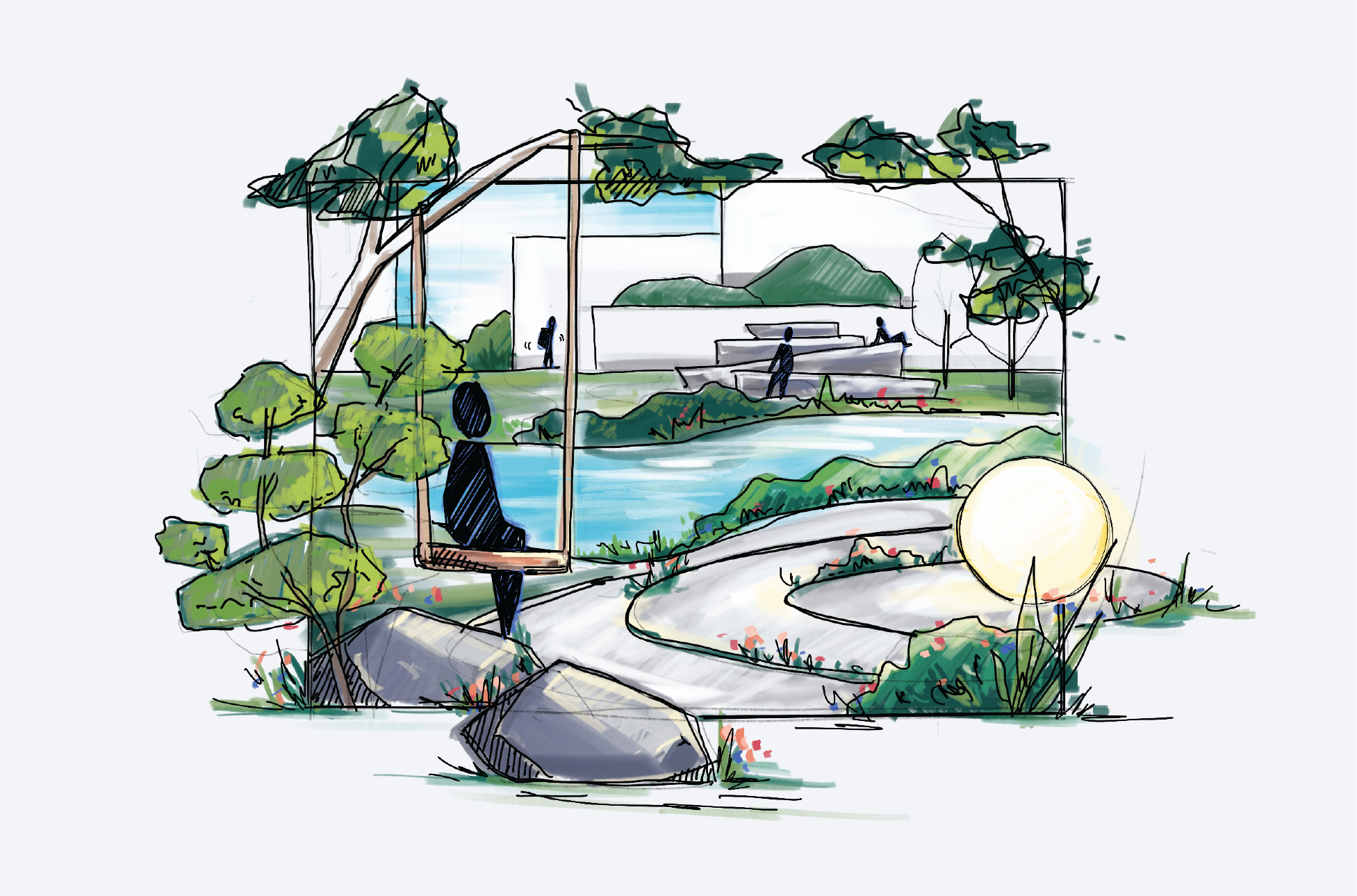
Illustration by Annie Xue.
Project Specs
Timeline: 15 weeks
Deliverable: concept proposal
Contribution: design thinking, design research, synthesis, prototyping, visual design, final concept, storytelling
Tools: Adobe Illustrator, Adobe InDesign
Team: Madeline Goutlet, Kate Hodges, Grace Kim, Hannah Kwan, Lindsey Thompson, & Annie Xue
Special thanks to our senior capstone advisors: Gray Garmon & Brooks Protzmann
Tainted and Forgotten
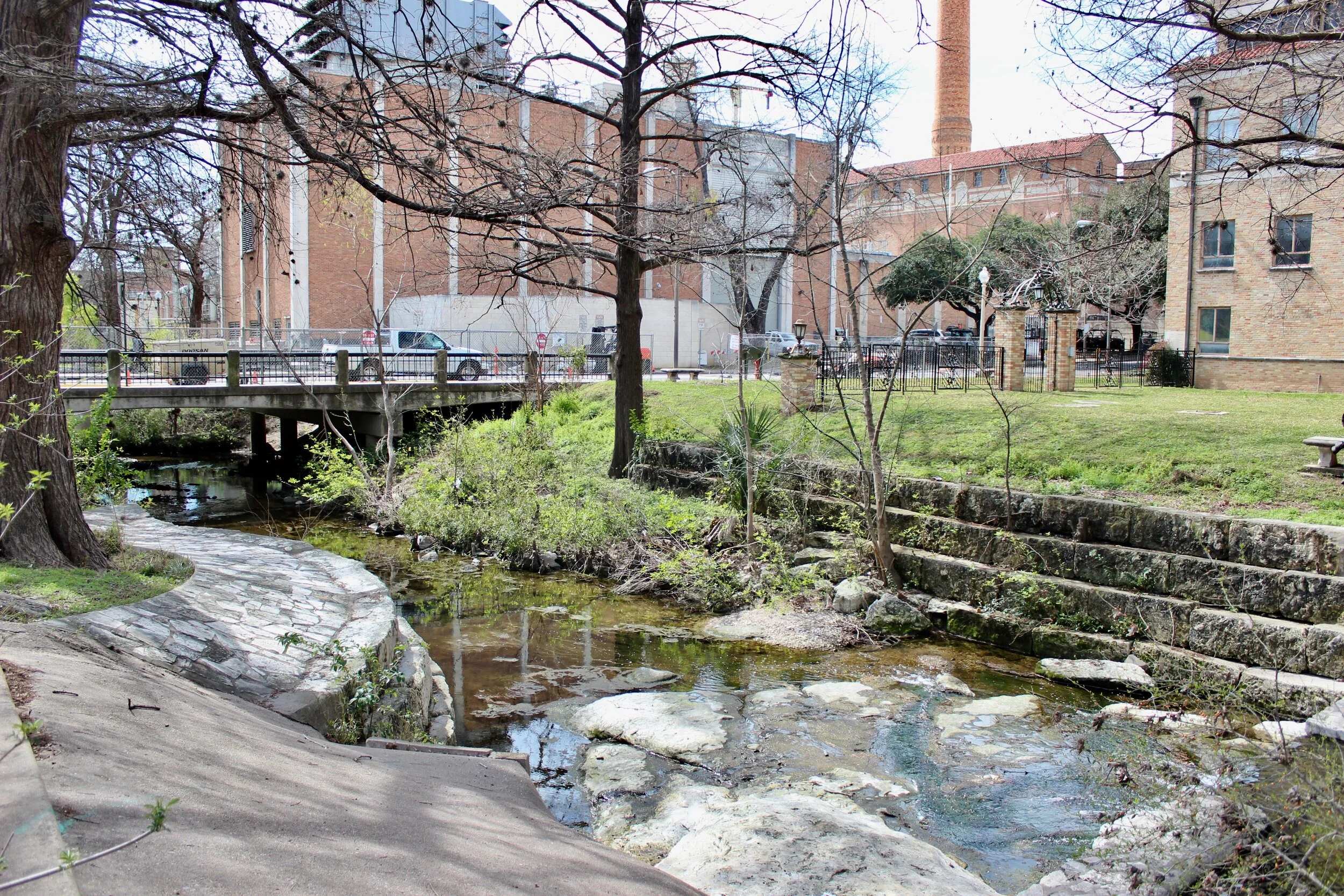
Austin’s Waller Creek runs right through UT’s campus. Today, if students know of the creek at all, it’s probably because of its association to a homicide several years ago. But the students who remember that tragedy are graduating, leaving in their place those who don’t know of the creek. But it wasn’t always so overlooked. In 1969, students protested the removal of trees near Waller Creek, which was planned to make room for the expansion of the football stadium. These students were so passionate that they climbed into the trees in the face of bulldozers, grabbed discarded tree branches, and marched them to block the entrance of the Tower. In the end, 27 students were arrested.
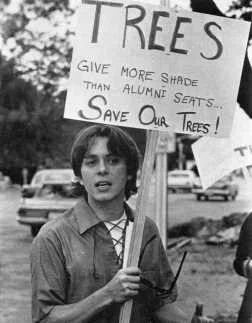
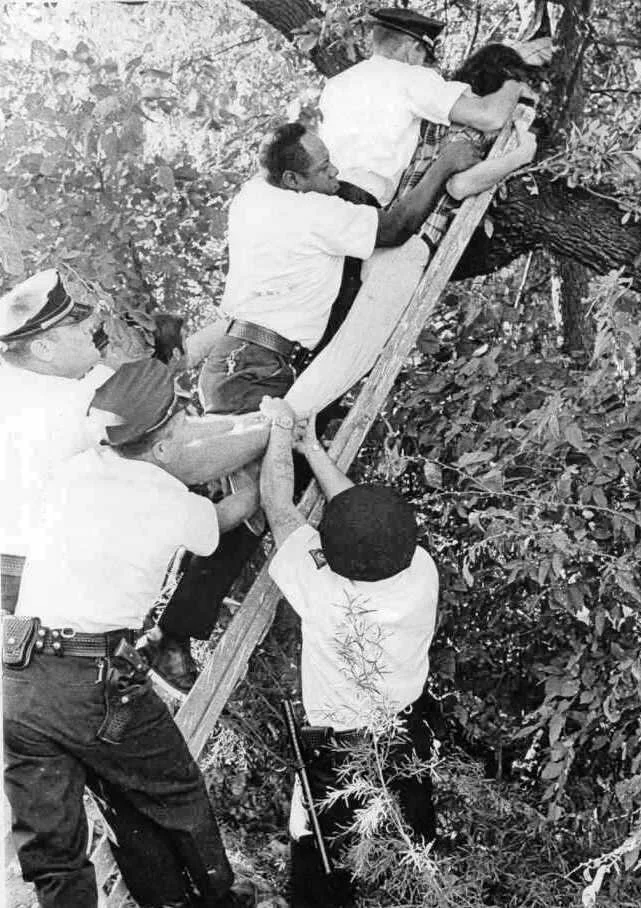
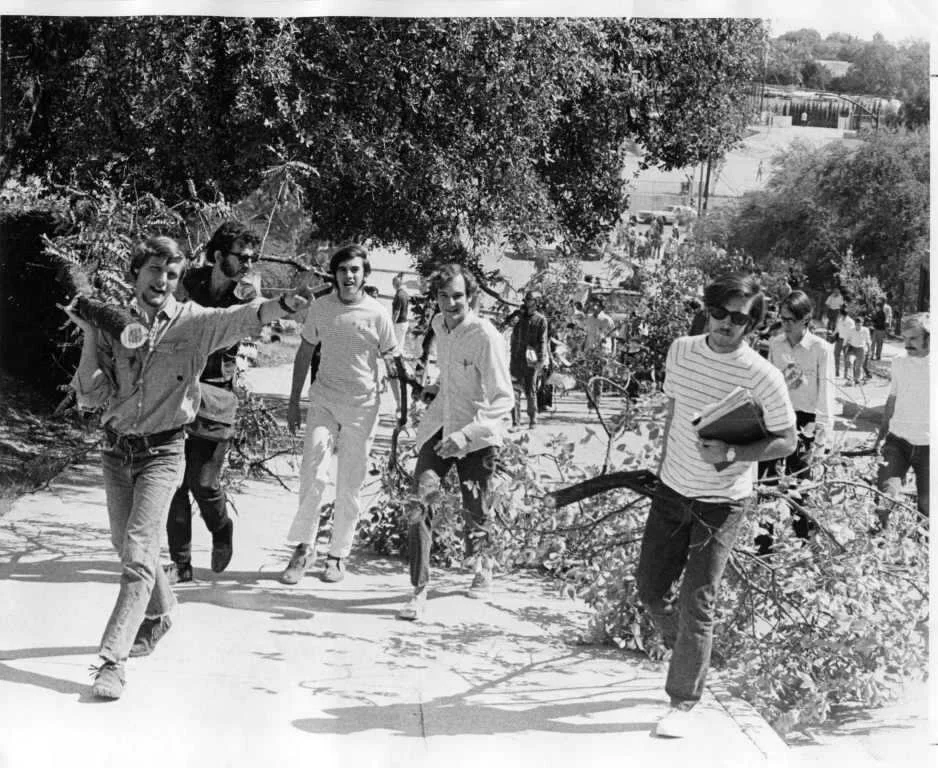
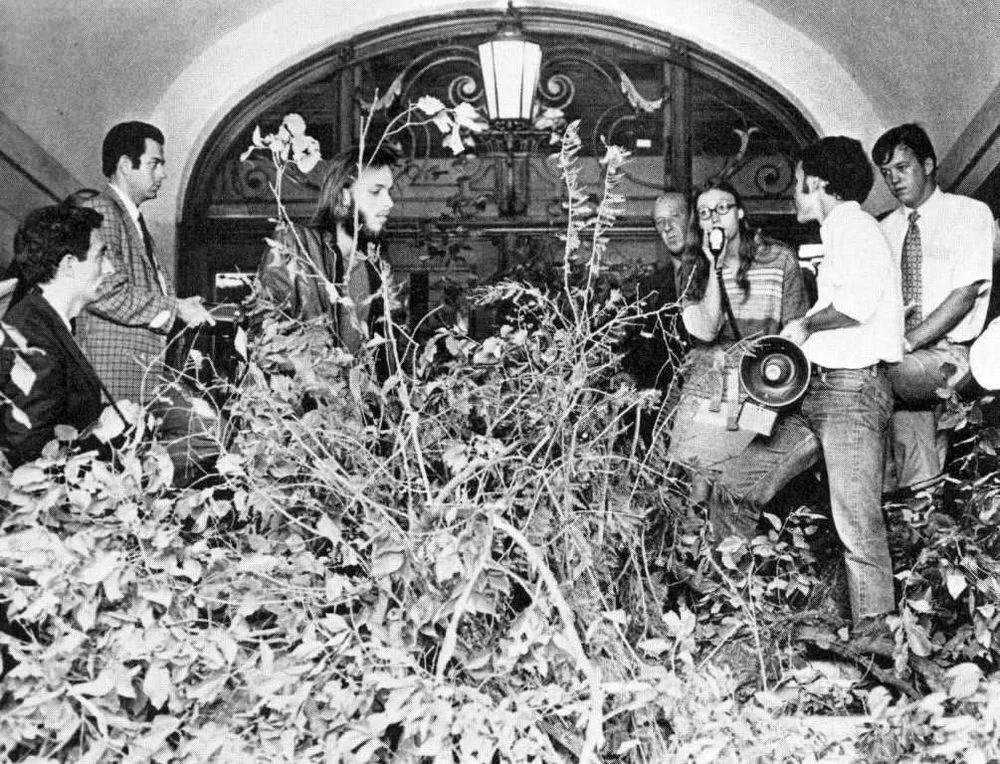
The students of the Battle of Waller Creek were struck with passion for this body of water, but today’s student body couldn’t care less.
Still, Waller Creek is still increasingly becoming the geographical center of the 40 Acres as campus expands eastward. So, if the UT Tower stands as the head of the campus, then we proposed that Waller Creek should be the heart.
This lead us to our problem statement: How might we engage Waller Creek to enhance the UT student experience?
Finding Our Lorax
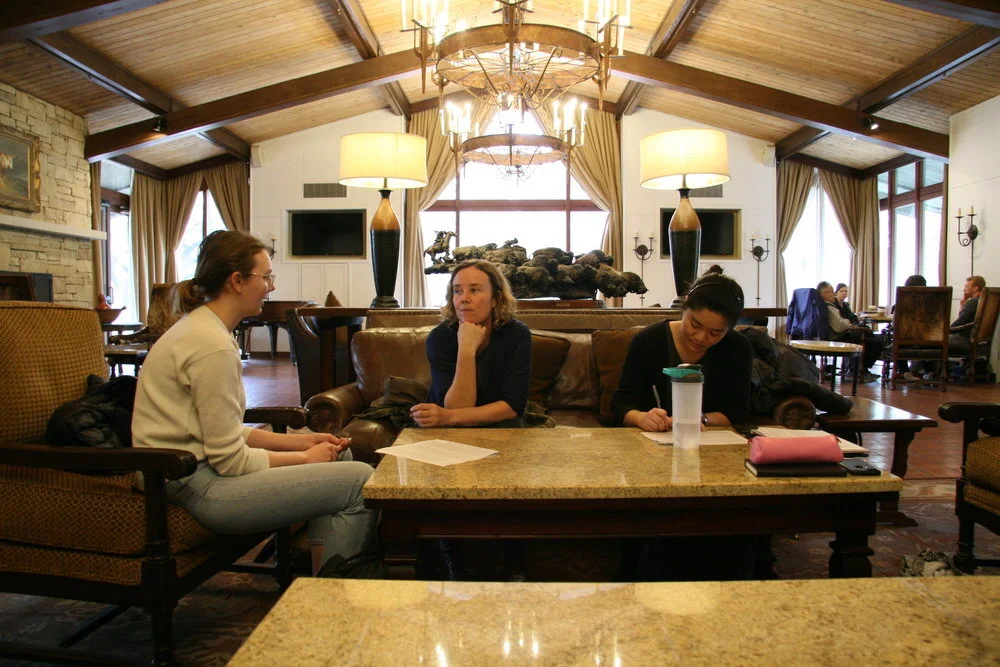
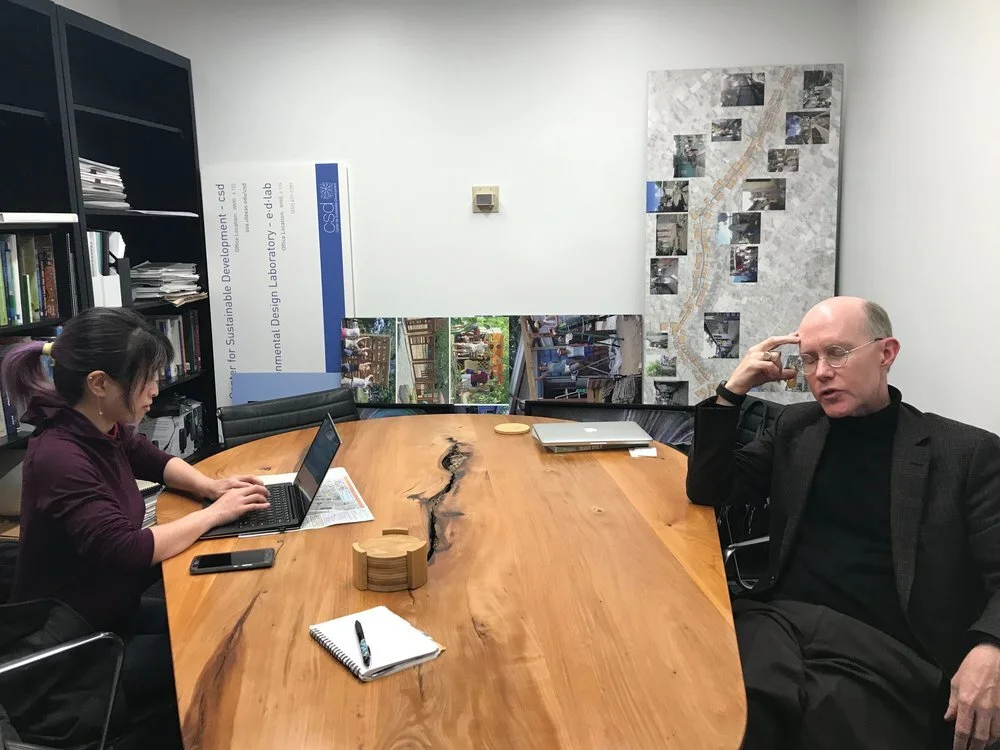
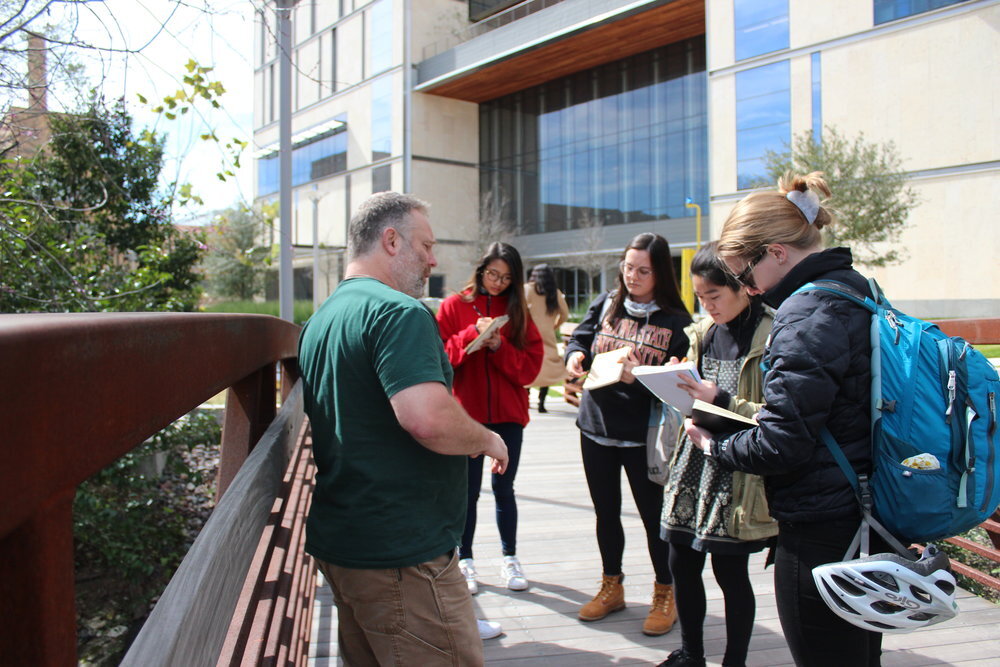
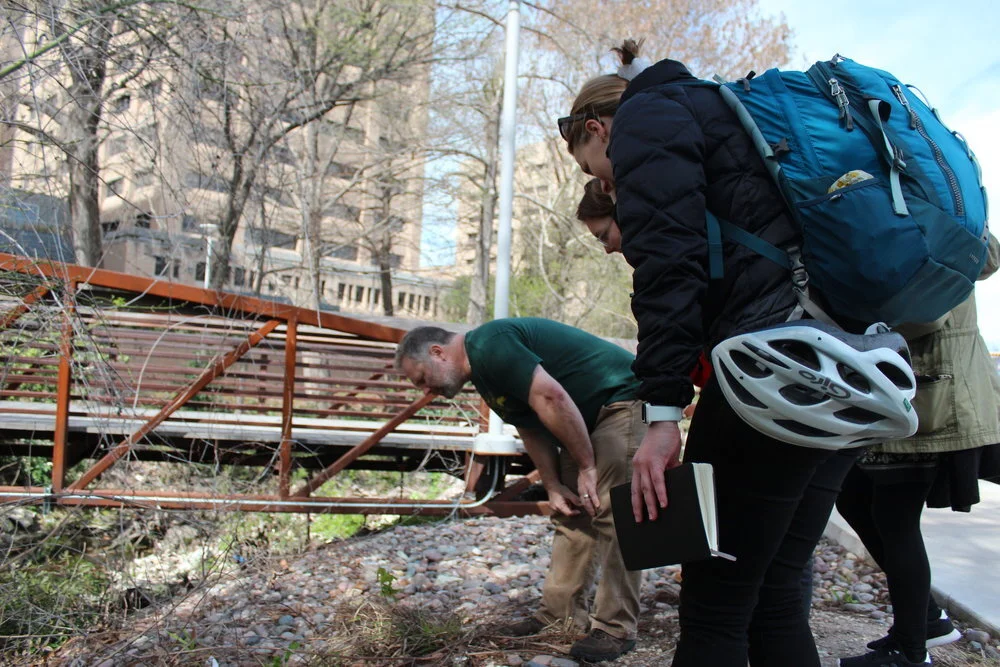
Our field research lead us to 6 experts in sustainability, biology, architecture, and art. After half a dozen interviews with apathetic and unaware students, it was refreshing to hear from experts about the value of the creek. Kevin Anderson, an environmentalist who had a unique connection to the creek, became the first person to speak to us about it with passion. While many of his views around the creek were romanticized, we took from him that the creek serves more than simply as a piece of biology. We found our Lorax in Kevin, and he inspired us to connect the dots between several of our interviews.
“[The appeal of the creek is that there is] privacy in the midst of this crazy campus… a moment of quiet escape.” - Kevin Anderson, Coordinator, Center for Environmental Research
“Austin always thinks about the Greenbelt as what makes the city livable, but the ‘graybelt’ can serve a purpose as well.” - Marie Lorenz, Artist-in-Residence, Planet Texas 2050
“UT doesn’t have a lot of intentional spaces for students to get a mental break.” - James Walker, Director of Sustainability, UT Office of Sustainability
“When I came to UT, I realized how competitive it really is and I lost all drive. I always talk to my friends about how stressful college is when it really isn't supposed to be.” - UT Transfer Student
"[Ideas of success] are huge stressors and means of competition for our generation; I don't think it's a healthy stressor." - UT Business Student #1
“I don’t have a favorite place to relax on campus, but if I had to choose it would be looking out of a window in McCombs.” - UT Business Student #2
Three major themes became apparent:
The stressors of college
Unfulfilled student needs
Benefits of urban nature
Could we help students see that spending time at Waller Creek would help them relieve the stressors of college?
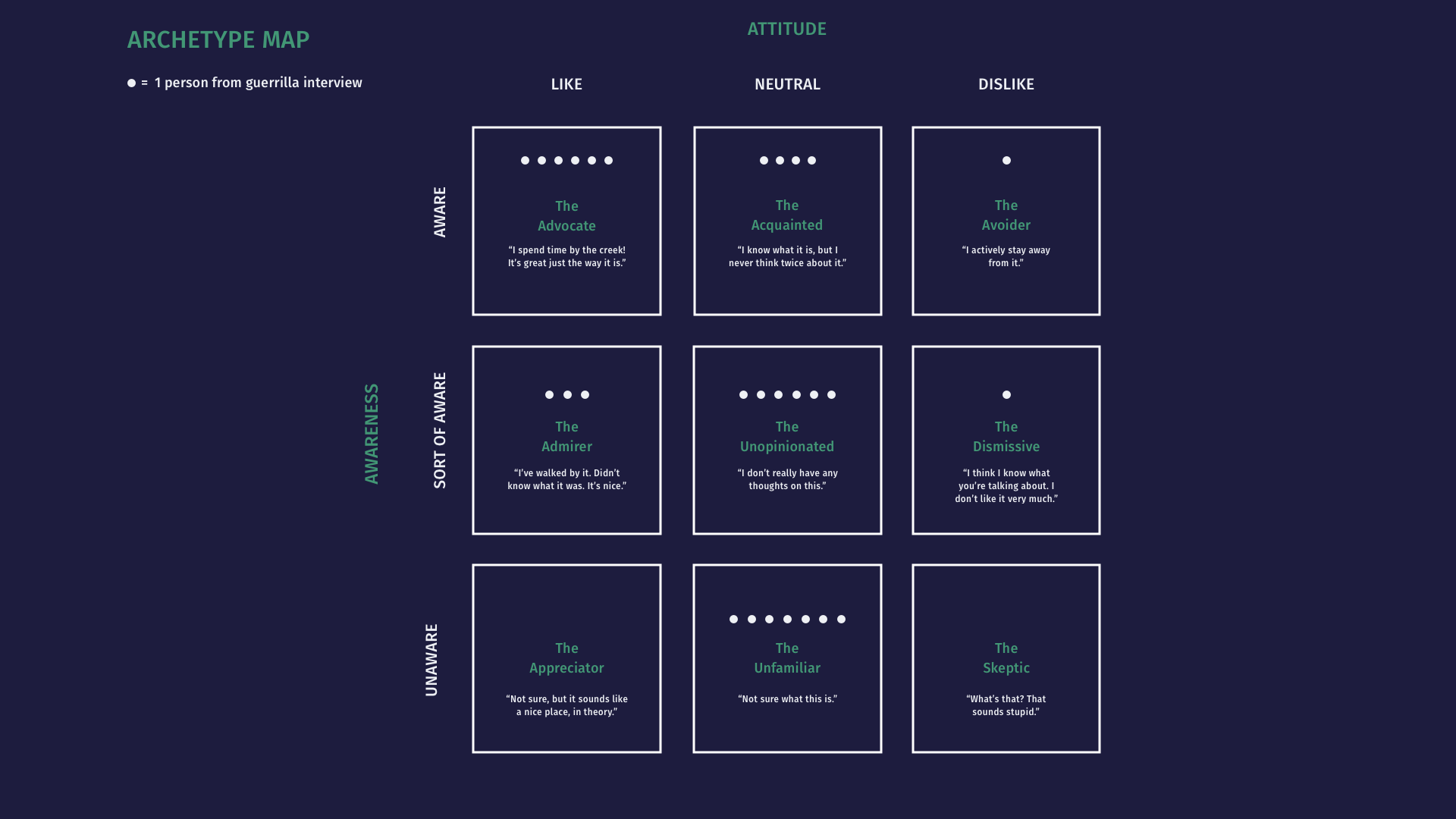
We mapped students from our guerrilla interviews along the axes of awareness and attitude regarding Waller Creek on this archetype map. We started to notice some clear trends appear. Most students fell into the “neutral category,” while completely unaware people don’t have an opportunity to develop an opinion. But, we found that those who were aware of the creek were automatically optimistic about the creek’s potential. Even the unfamiliar and the un-opinionated started to imagine the possibilities of the space when we took them there. The archetypes helped us focus on two main types of students, which we turned into personas.
To get the students of today to become creek advocates, we have to convince them that the creek has something precious to offer them. With our research and our personas in mind, we had a new problem statement:
How might Waller Creek become a mental wellness resource to help Paul and Haley manage their stress?
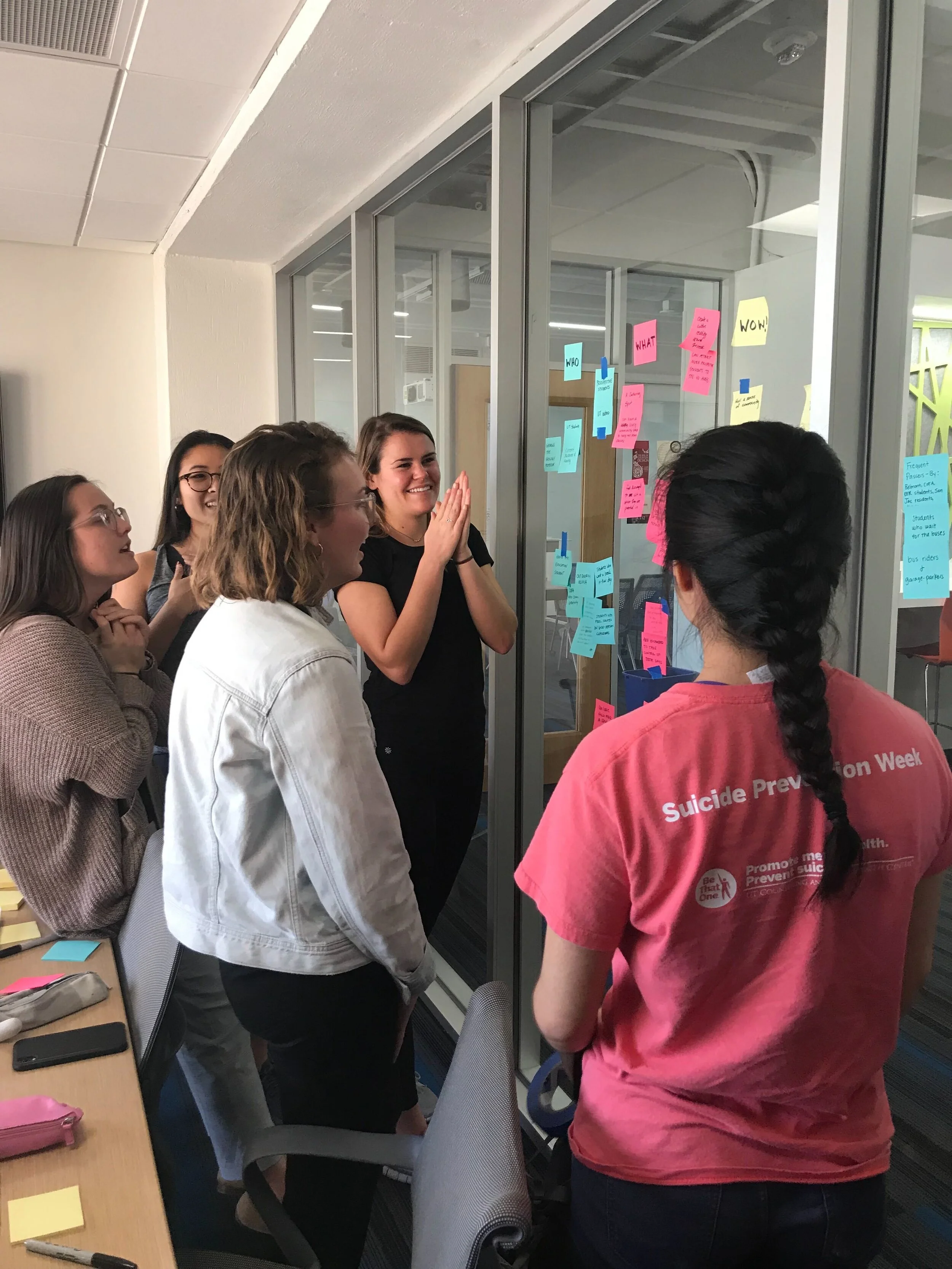
We entered an ideation phase, diverging then converging until we came to a set of solutions we were interested in testing out.
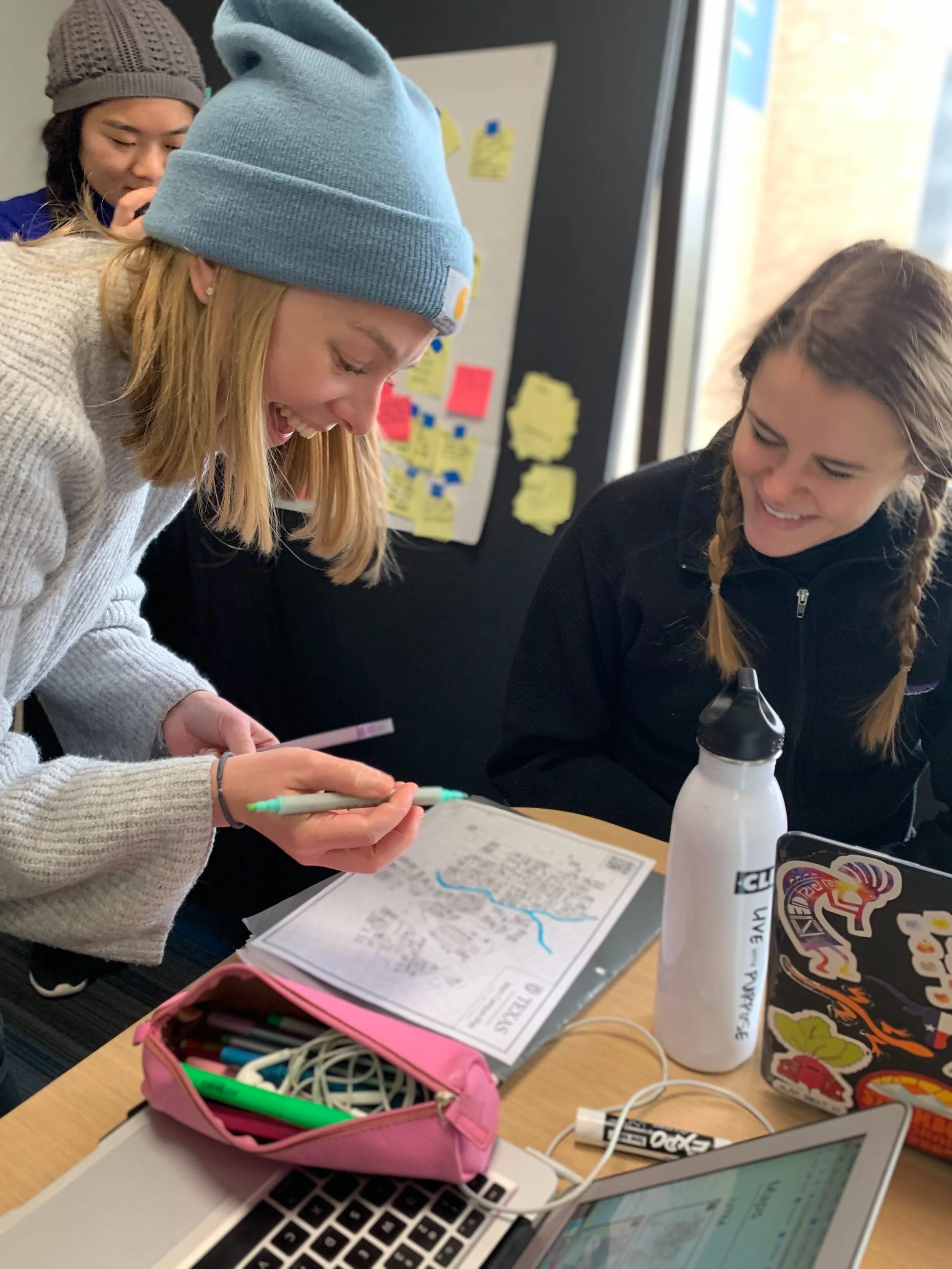
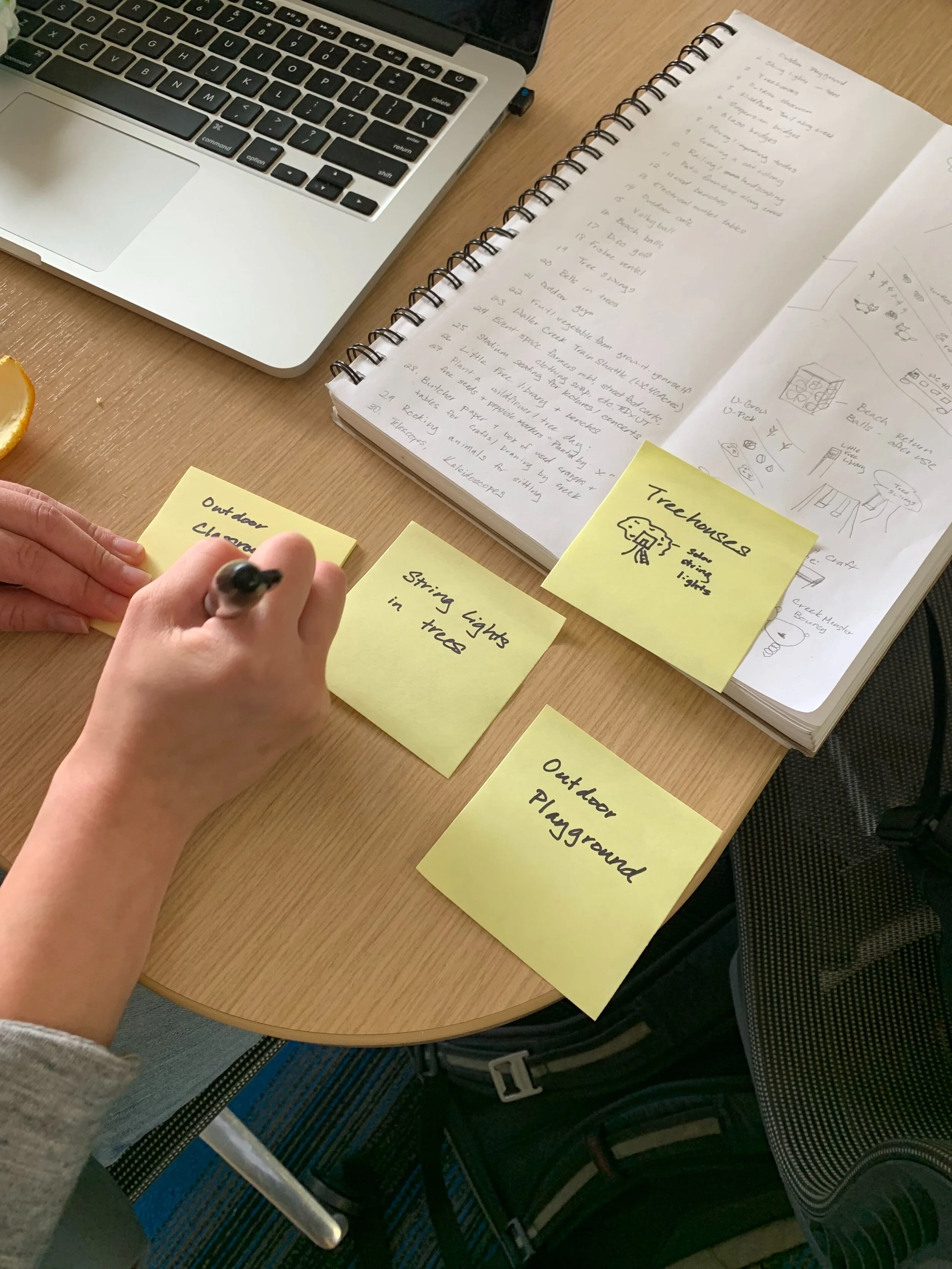
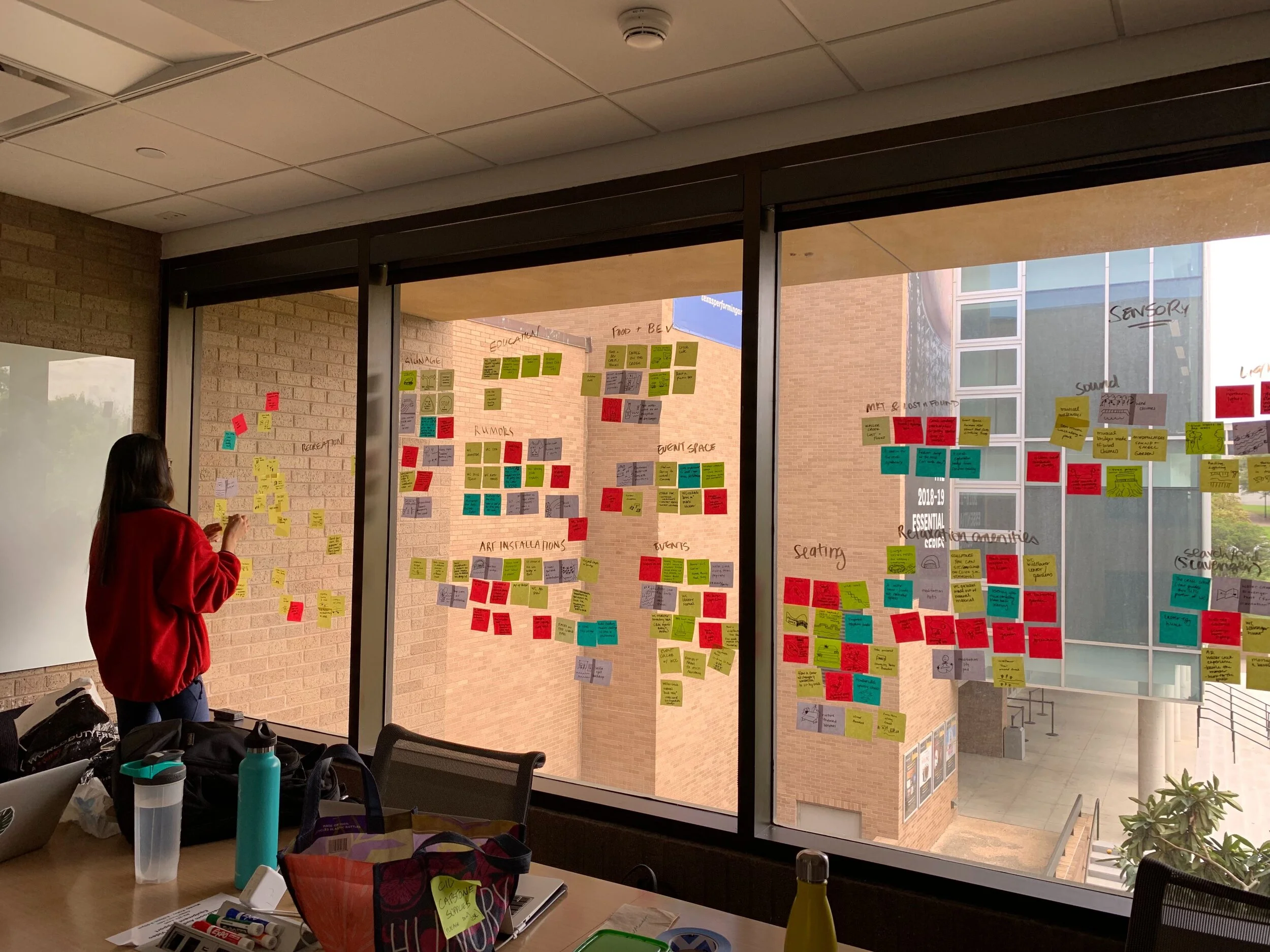
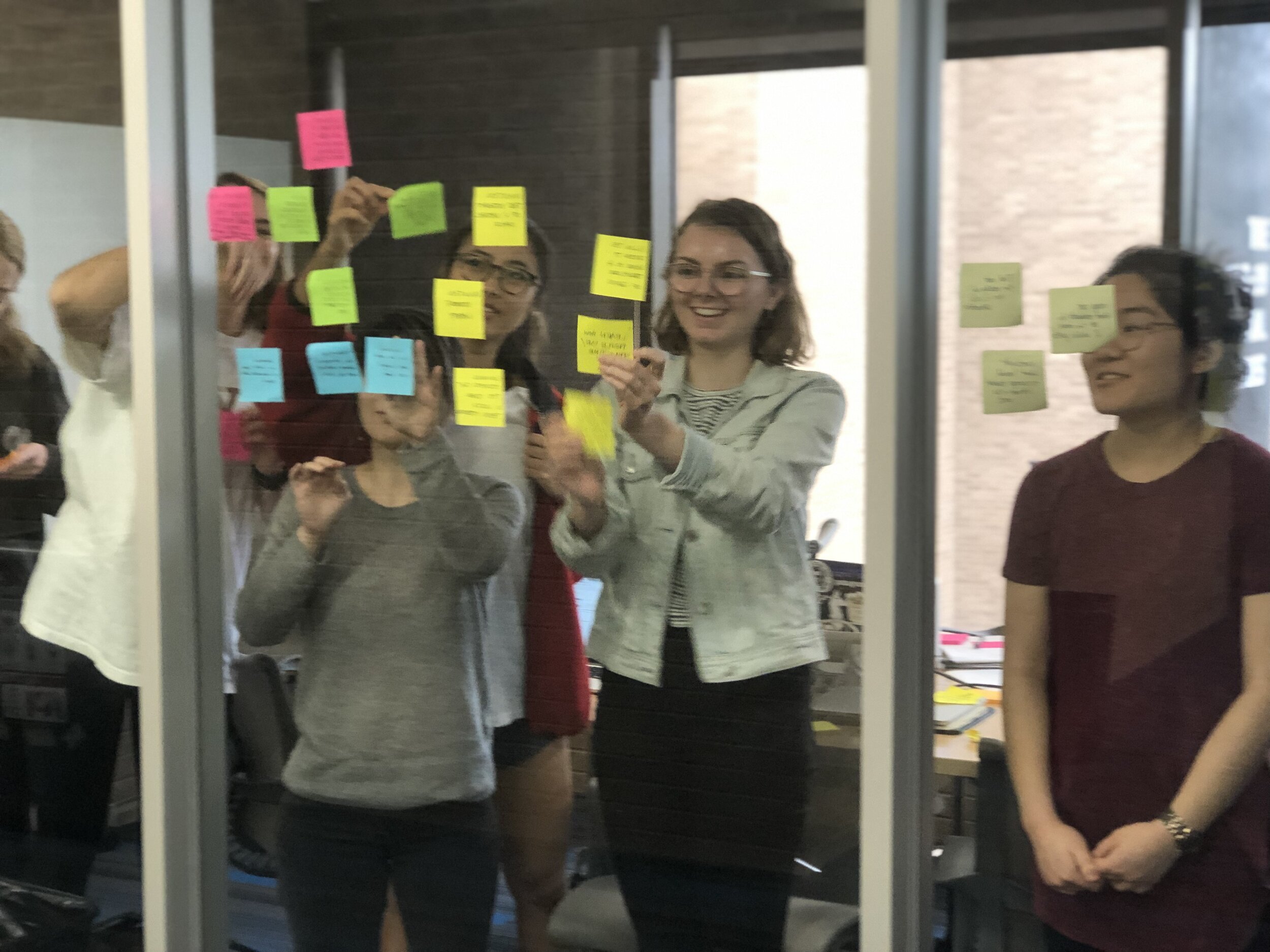
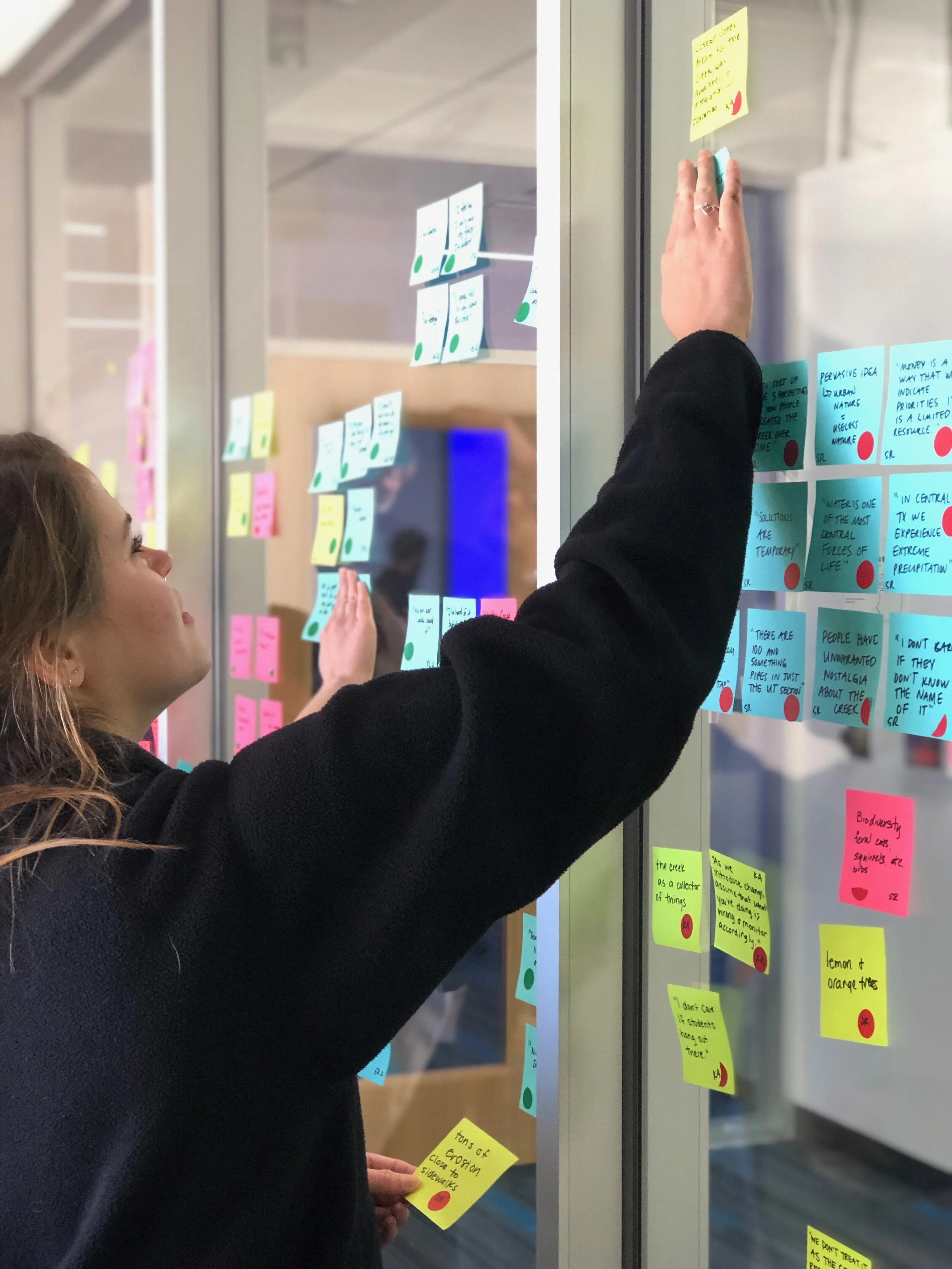
Enter: The Creek Geeks
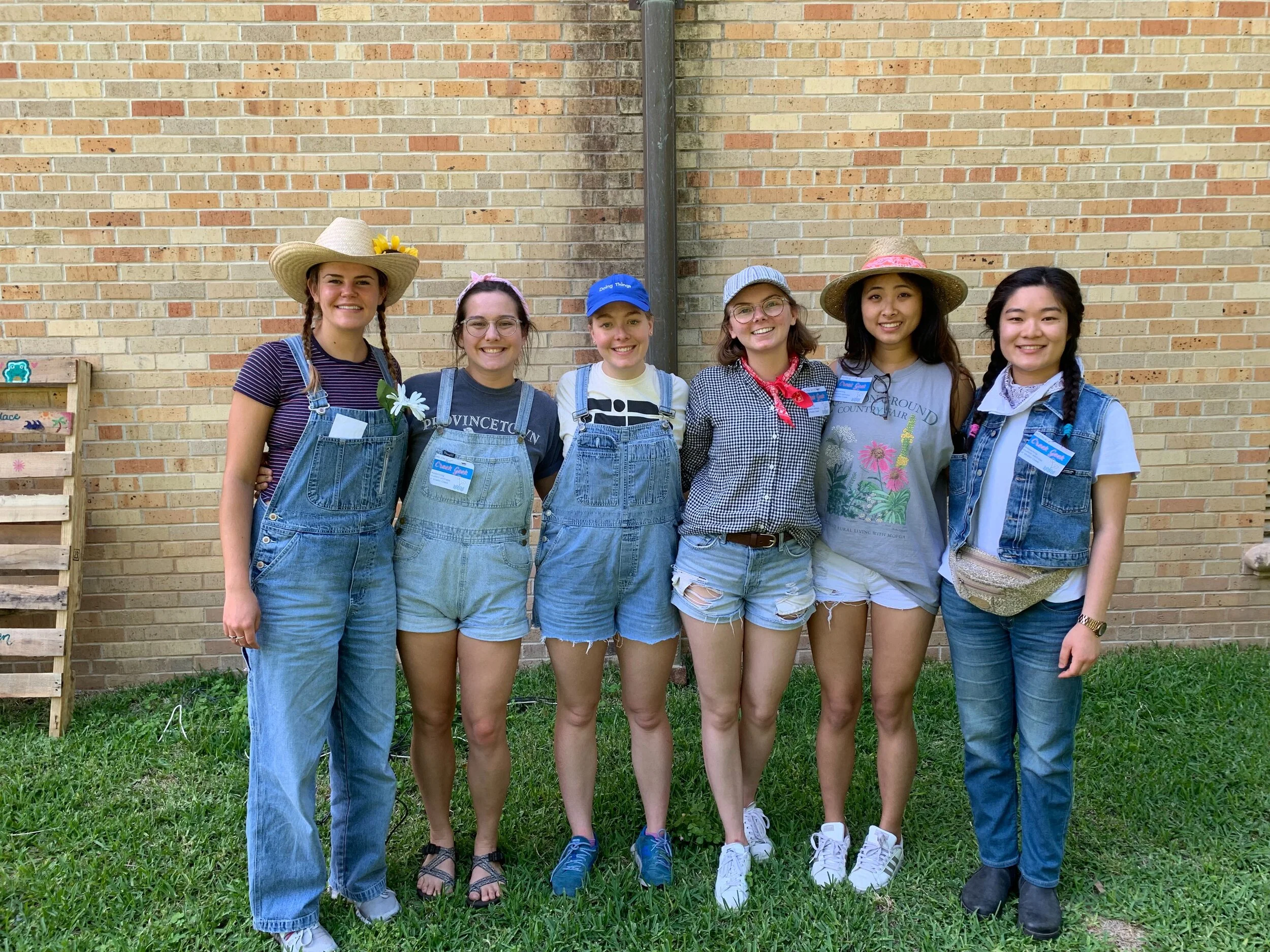
Each week for the next three weeks, our team (at this point, self-branded as the Creek Geeks) set up prototypes to test out student engagement near the creek.
Each prototype had a unique goal, and tested a different idea and concept relating back to our insights. We wanted an area with enough traffic that was a convenient for someone like Paul to enjoy, but also a place with enough space and with a peaceful environment for someone like Haley to spend time.
We discovered that the quiet, open space just North of 24th street would be the perfect home to test out our ideas.
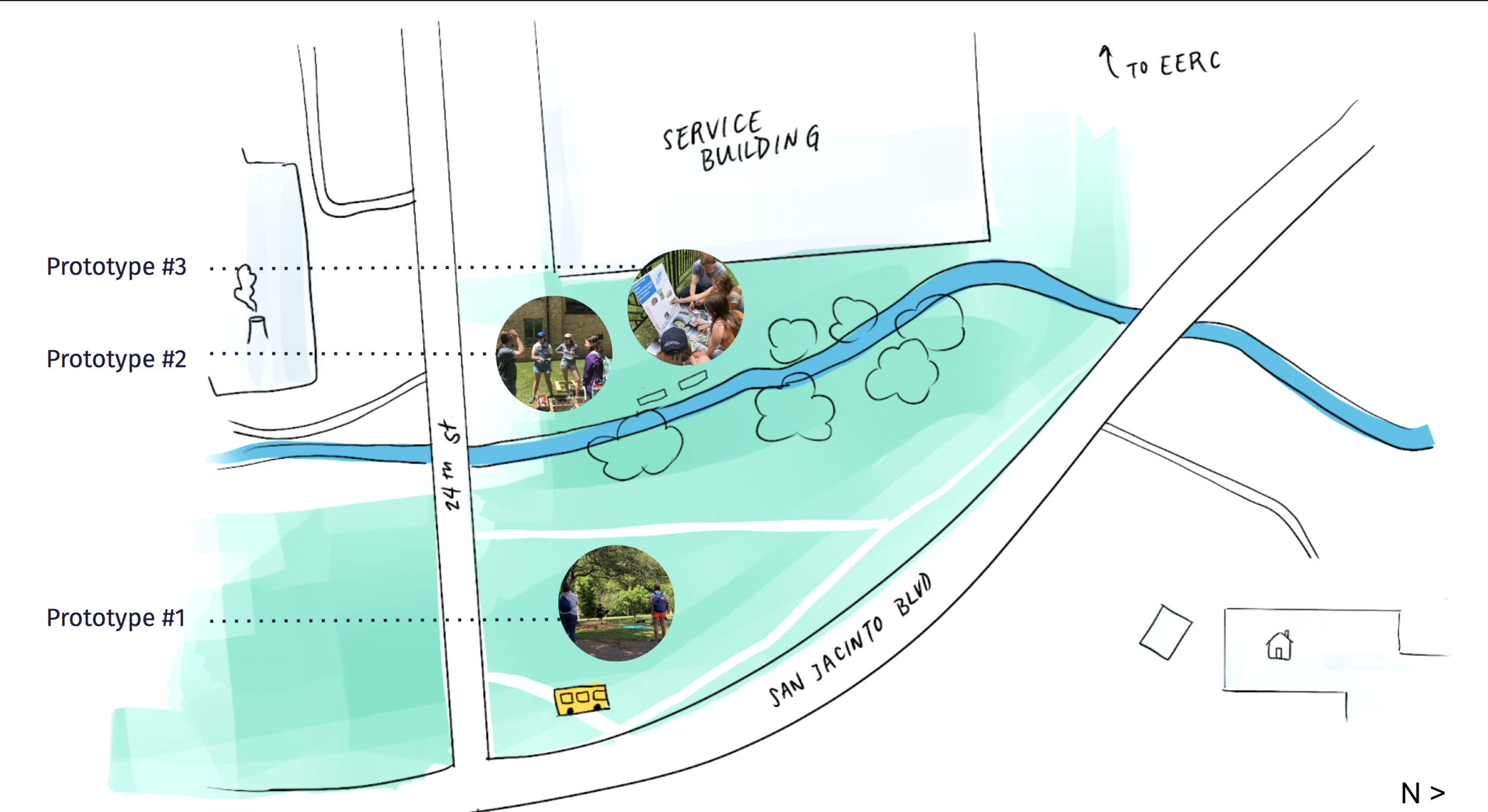
From a pop-up violin concert, to a community garden, to an Earth Day-themed event, we set up prototypes that allowed us to learn quickly about our users.
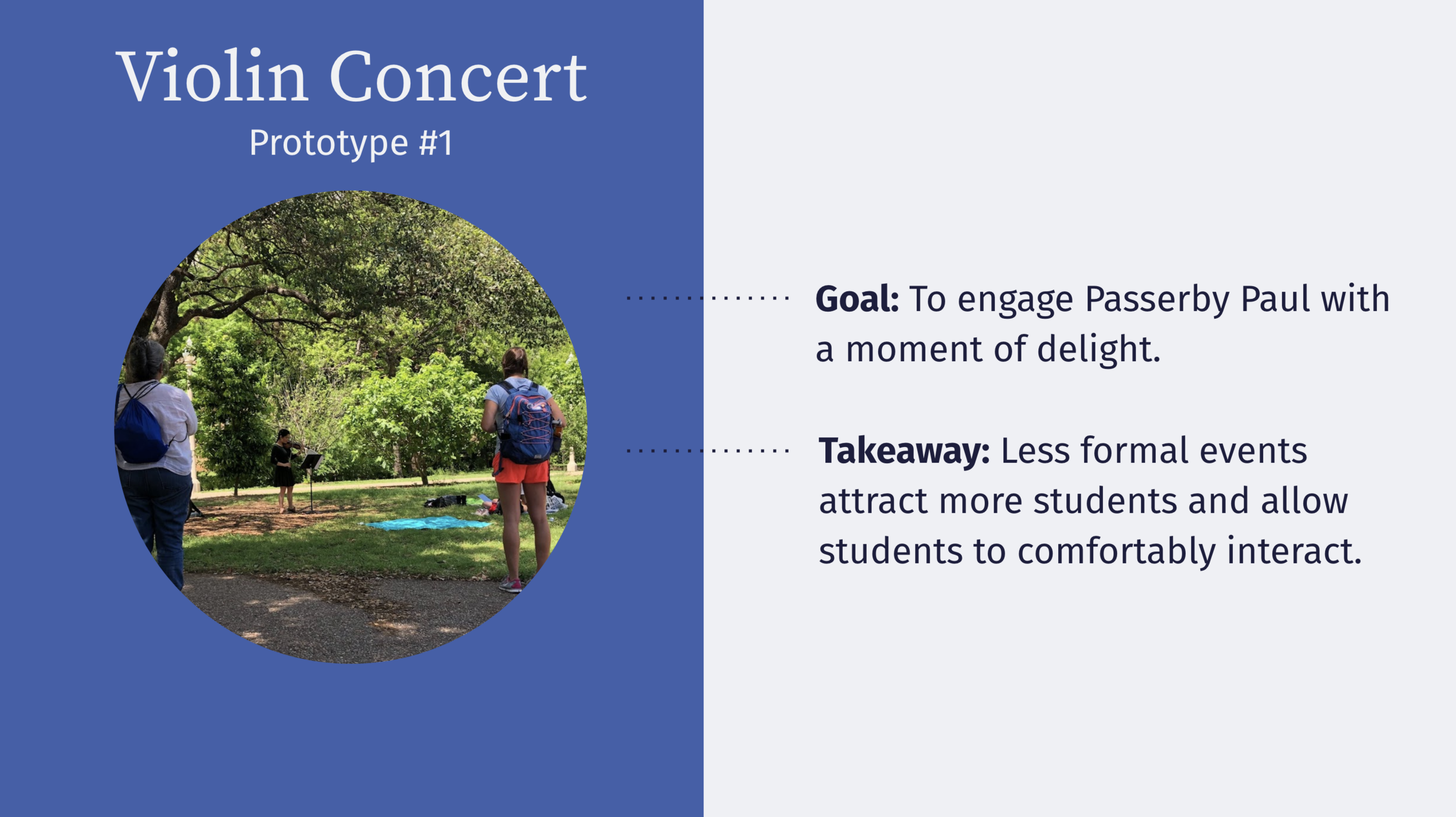
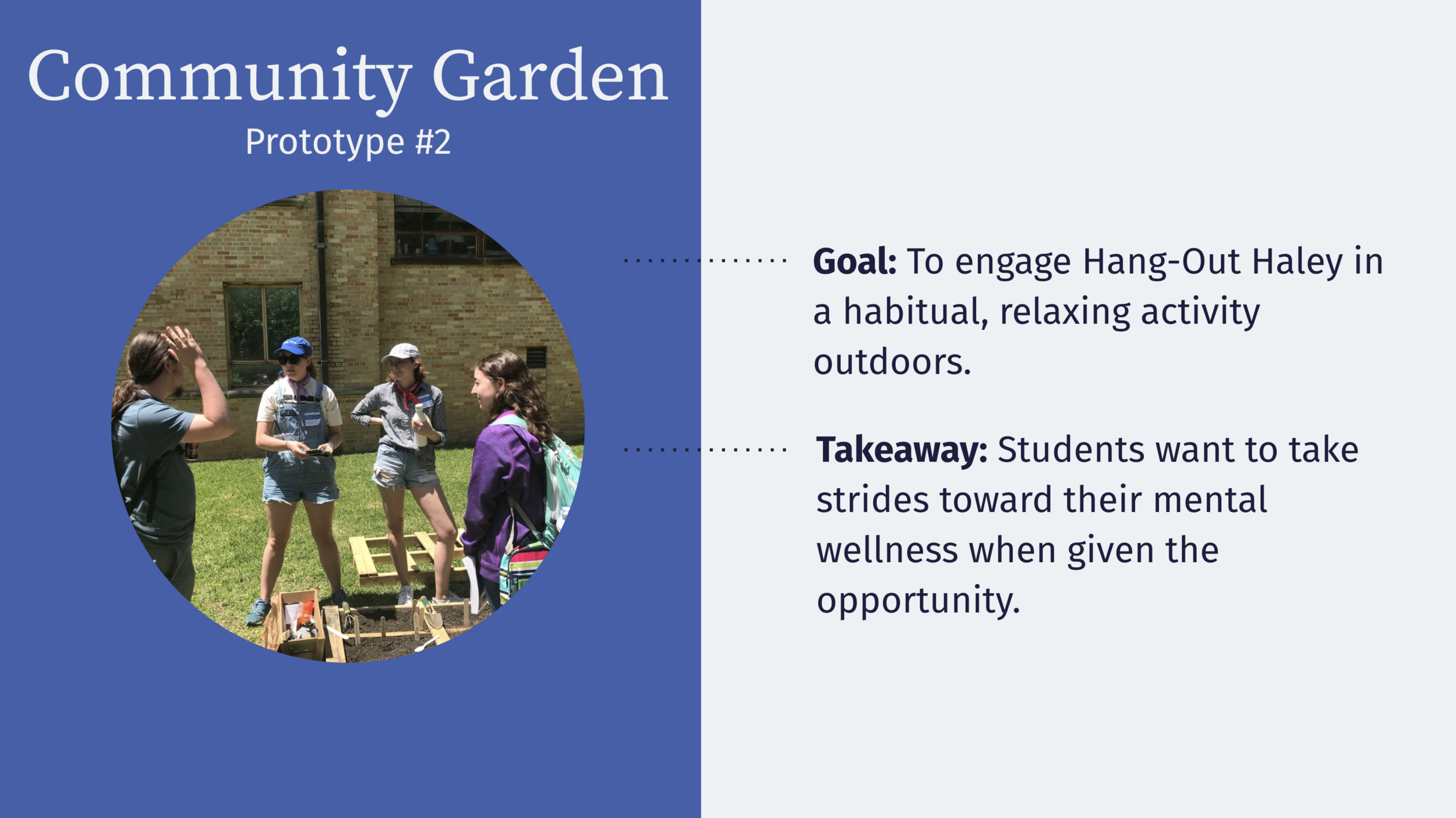
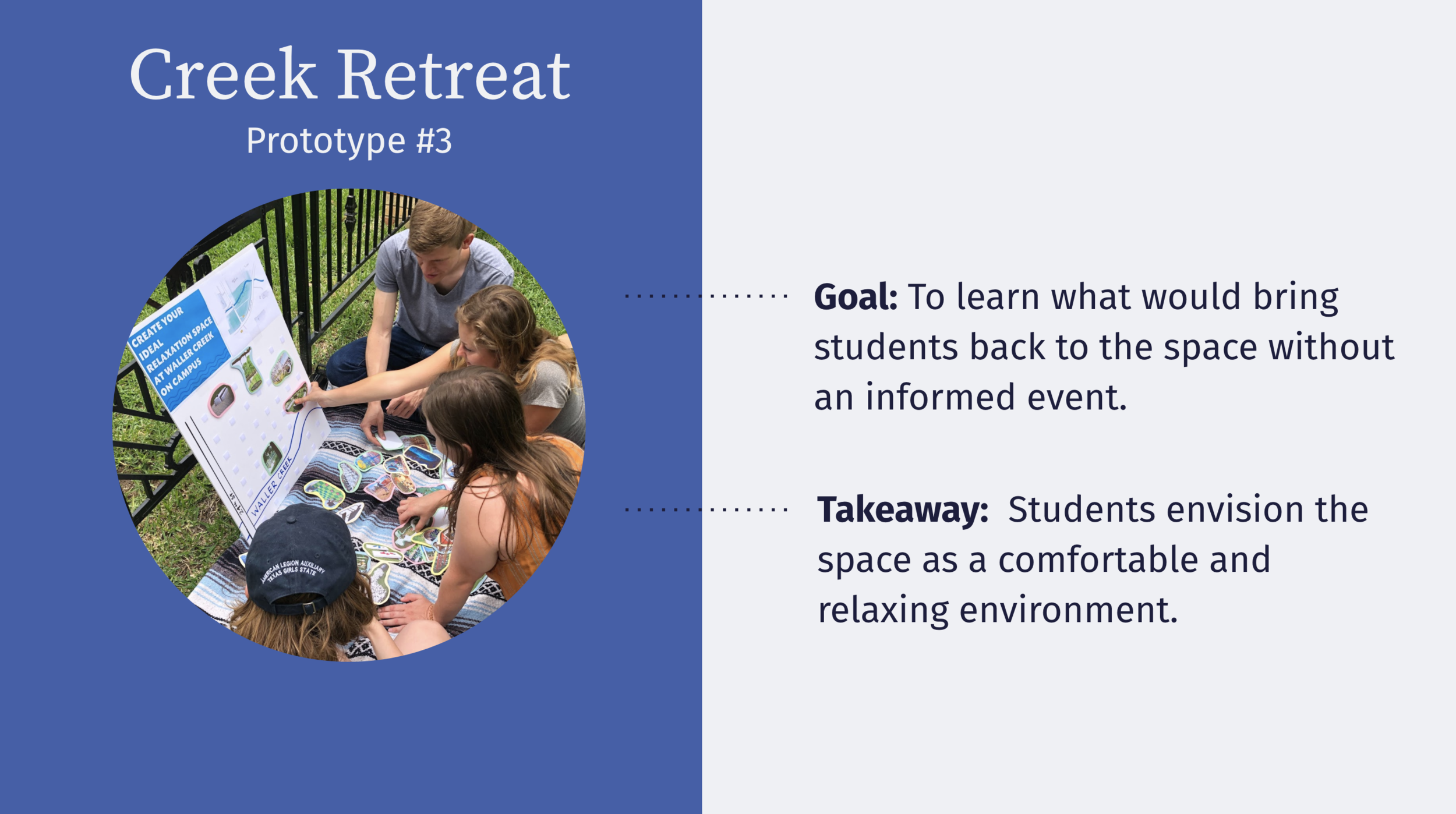
We wanted to combine the most successful parts of our prototypes to imagine the future of Waller Creek on UT campus.
Final Concept
As we designed our proposal, we wanted to be realistic about our influence and the timeline. While we would not be implementing our proposals ourselves, we would be handing them over, along with our research, to the Office of Sustainability and the Department of Theatre and Dance to use in their upcoming projects. Since the Creek Geek team wouldn’t have a direct hand in these future endeavors, we created a set of design principles that embody the spirit of our project. This way, anyone who picks up this project in the future can check their proposals against our principles to honor the creek and the students.
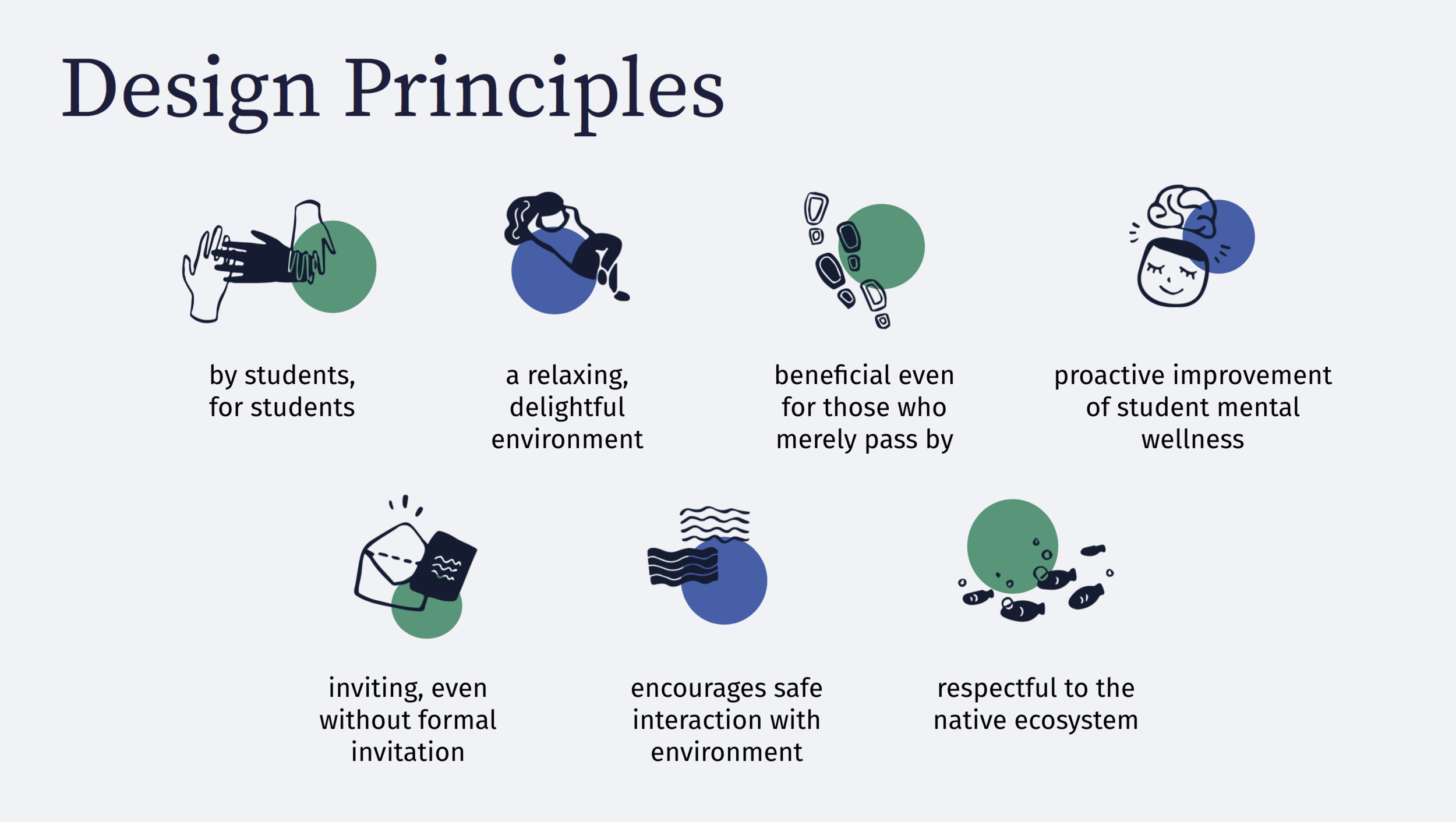
With these principles in mind, we presented our proposal: a set of concepts for the future of the spaces surrounding the Waller Creek.
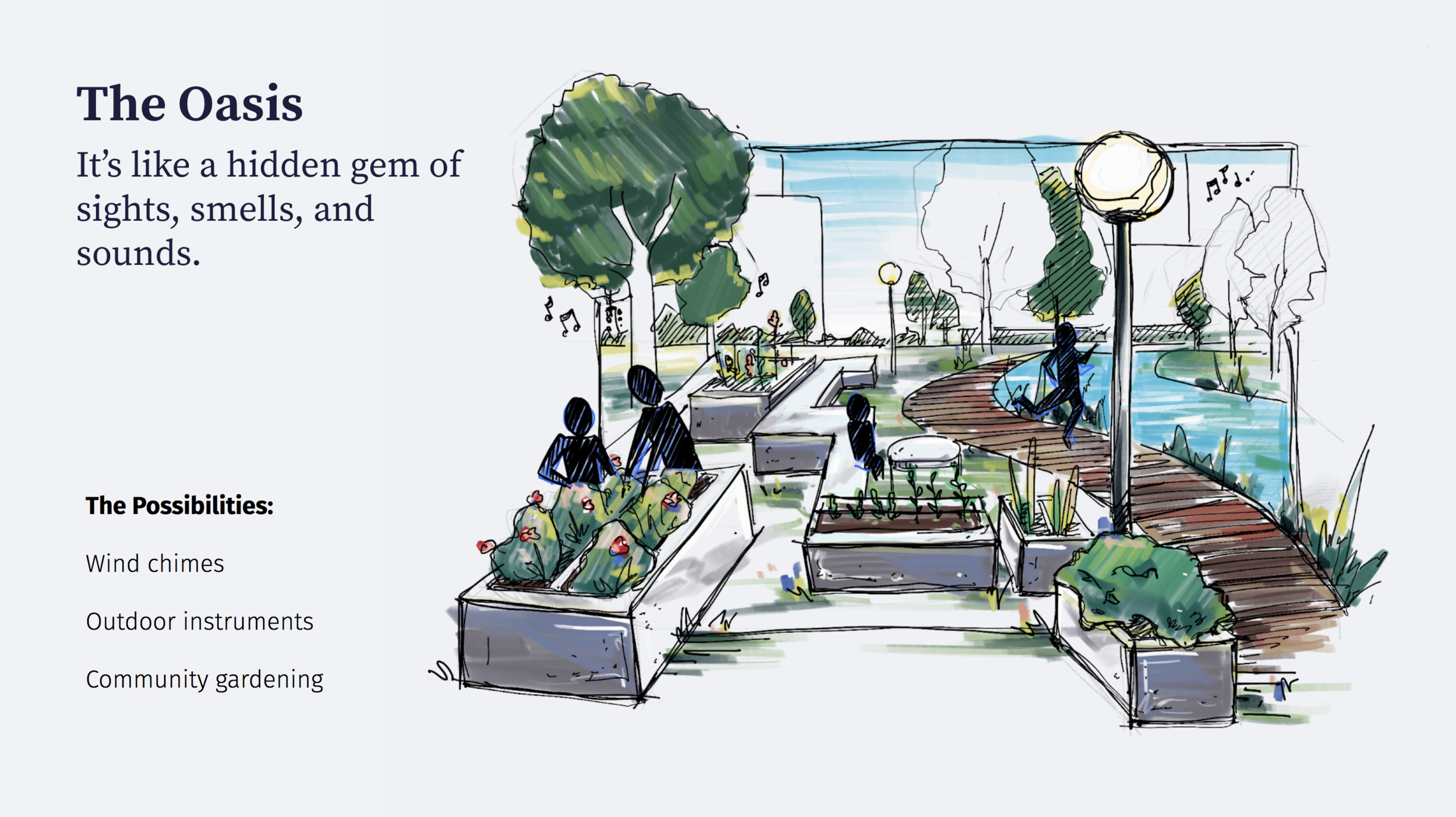
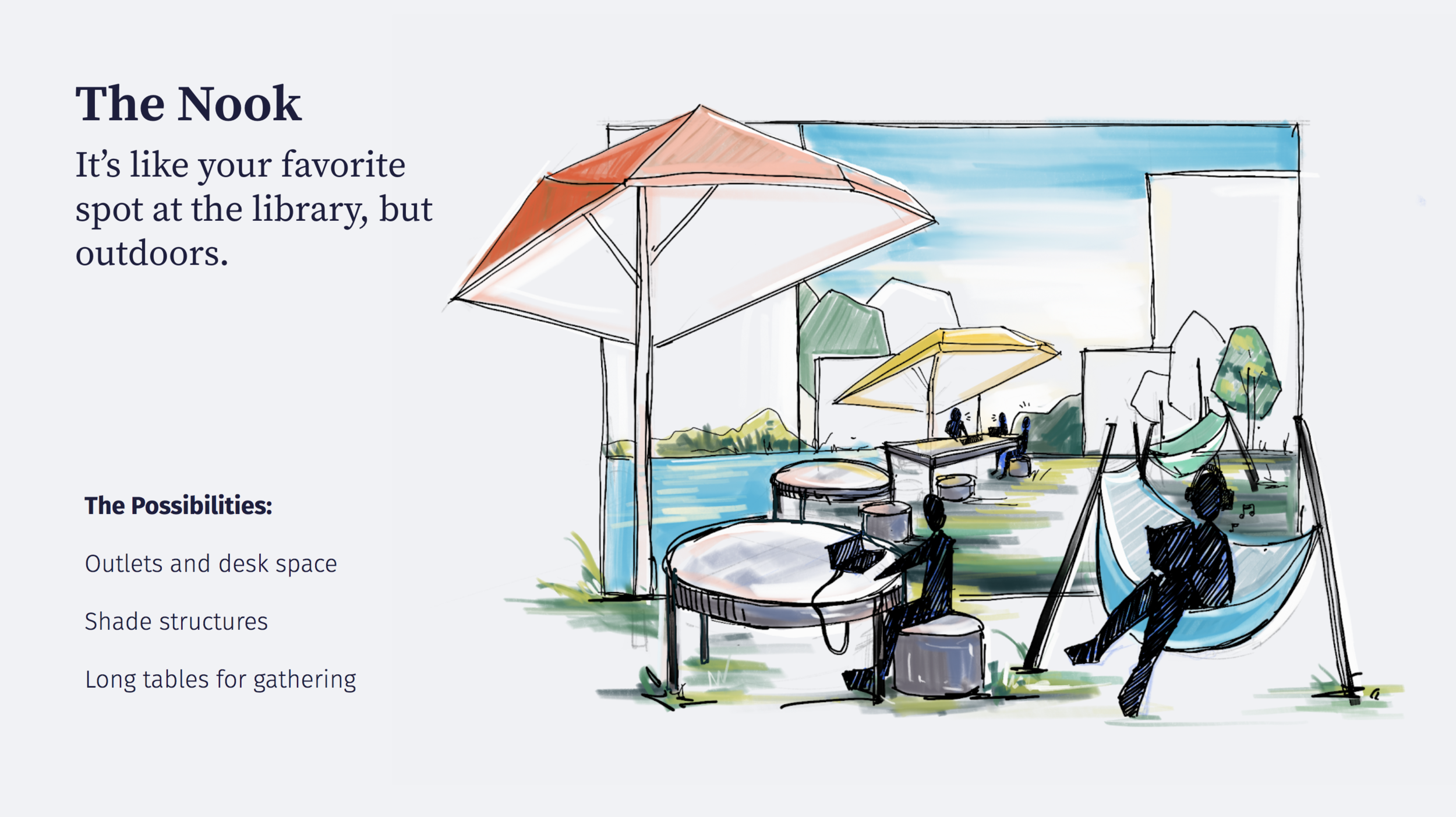
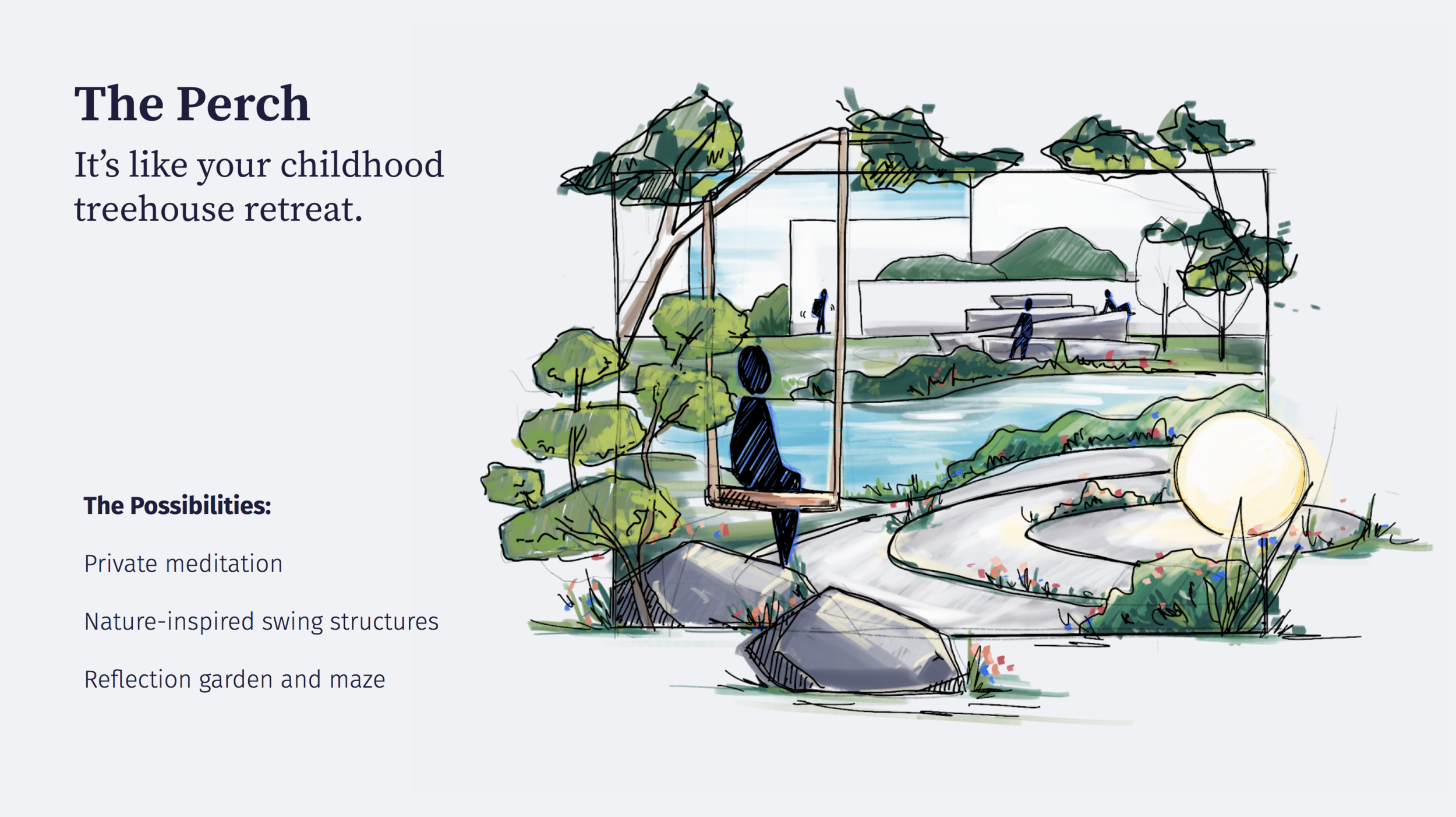
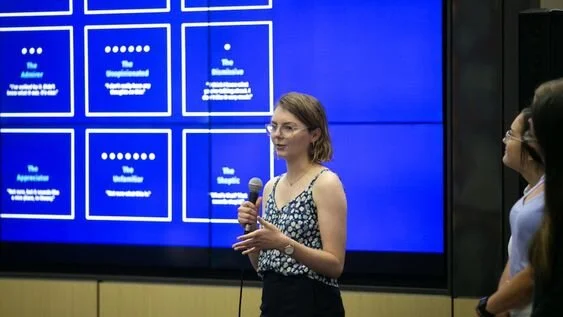
At the end of 15 weeks, we presented our work to the larger UT community, including our expert interviewees, who received copies of our work for their use, as well as in the SDCT student showcase. The following spring, I was invited to speak to students in the Department of Theatre and Dance who are working on a similar project with the Waller Creek area, and the next class of students completing the Design Strategies capstone class.
We understand that making the Waller Creek a better experience takes more than just a couple of desks or swings. It takes a shift in the student and university perspectives. We want students to see Waller Creek as something to care about and advocate for, and we know this needs to come directly from the students themselves. As seniors who likely will not be around to see our proposal through, we want to make sure we set the foundation for those coming in after us to tend to the cause.
The Inaugural Capstone
I completed this project as a part of the inaugural capstone class for the Design Strategies Certificate at UT, a program that promotes interdisciplinary teams to use design thinking to solve unique problems. Including the capstone, students also complete 19 hours of coursework in design thinking, related fields, research projects, and internships.
Read more about the course here →